
Compagnie du Bois Sauvage
Compagnie du Bois Sauvage is a great opportunity to invest in a strong, profitable luxury chocolate business and a variety of assets, currently priced much lower than its true worth before an important change in 2026.
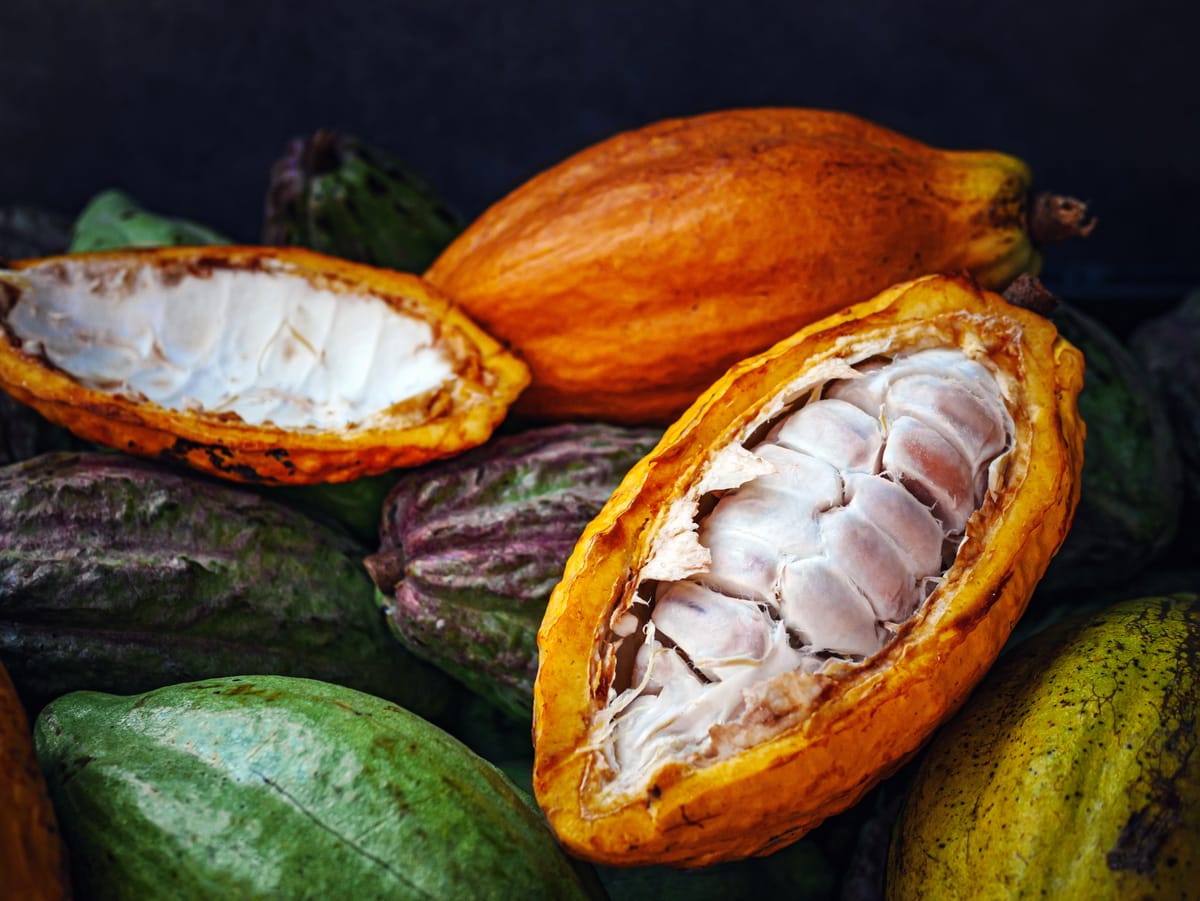

However, this discount has hidden the fact that the Chocolate division, which is the company's main industrial asset, is of very high quality by growing revenue and expanding margins amidst a crisis. The company effectively treats the rest of the portfolio, which includes substantial real estate and banking assets, as a "free option."
I will establish a position to take advantage of the intrinsic value discrepancy. The discrepancy between the share price (~€275) and the conservative SOTP value (>€590) offers a massive margin of safety.
The risks are primarily structural (illiquidity, family control) rather than fundamental. The business itself is sound, solvent, and profitable. With the March 2026 Strategic Review acting as a hard deadline for value realization, the risk-reward profile is heavily skewed to the upside.
Summary
Compagnie du Bois Sauvage is a historic, family-controlled Belgian investment holding company that operates a unique hybrid model, blending the characteristics of an industrial conglomerate with those of a diversified financial portfolio. The company generates revenue primarily through its fully consolidated chocolate division—comprising the prestigious Neuhaus brand and the widely accessible Jeff de Bruges network—which provides a robust, cash-generative operational base. This industrial pillar is supported by a strategic investment portfolio that includes a large stake in the real estate developer Eaglestone, as well as smaller stakes in publicly traded companies like Umicore and Ageas and the German private bank Berenberg. The company is in a strange situation: its market value is about 46% lower than what its assets are worth, meaning its industrial assets are being valued much less than similar companies, and its financial investments are hardly valued at all. While the operational business has demonstrated exceptional resilience against historic cocoa inflation, the holding’s valuation has been weighed down by the cyclical downturn in materials technology. The company faces risks due to portfolio concentration and family-controlled illiquidity, despite its strong defensive advantages in brand equity and pricing power.
1. Business Model and Corporate Structure
1.1 The Hybrid Holding Philosophy
Compagnie du Bois Sauvage functions not merely as a passive asset allocator but as an active industrial holding company, a structure that distinguishes it from pure-play private equity funds or passive family offices. The core philosophy of the group is anchored in the concept of "sustainable growth," a mandate that influences its long-term retention of assets and its hands-on approach to governance. The business model divides into two distinct operational realities: that of an industrial operator and that of a strategic investor.
As an industrial operator, the company maintains full control over its "Chocolaterie" segment. This is not a financial investment that operates independently; rather, it is a fully consolidated operational subsidiary in which Compagnie du Bois Sauvage actively participates in strategic choices, capital expenditure planning, and executive oversight. The ownership of Neuhaus, the inventor of the Belgian praline, along with Jeff de Bruges, Corné Port Royal, and Artista, places the holding company directly in the fast-moving consumer goods (FMCG) sector. This segment provides the "ballast" for the group—a steady stream of operational cash flows that cushions the volatility inherent in the financial investment portfolio. The model here is one of vertical integration and brand stewardship. The holding company is in charge of the whole value chain, from getting cocoa beans in Ecuador to selling them in stores all over Europe.
As a strategic investor, the business model shifts to capital allocation and influence. In this capacity, Compagnie du Bois Sauvage holds significant but non-controlling stakes in varied sectors. The primary vehicle here is Eaglestone, a real estate development group where the holding company acts as a cornerstone investor, providing the equity capital necessary for large-scale development projects in Belgium, Luxembourg, and France. Additionally, the portfolio includes minority stakes in listed companies like Umicore (materials technology) and Ageas (insurance), and unlisted assets like Berenberg Bank. In these instances, the business model relies on the receipt of dividends and long-term capital appreciation rather than operational EBITDA generation. The group leverages its board representation to influence strategy, advocating for prudent financial management and sustainable practices, thereby acting as a steward of capital rather than a day-to-day manager.
1.2 Governance and Ownership Structure
The stability of the business model is underpinned by its shareholder structure. Compagnie du Bois Sauvage is controlled by the Paquot family, primarily through the investment vehicles Fingaren and Entreprises et Chemins de Fer en Chine (ECFC). As of late 2024 and early 2025, these entities controlled a combined voting majority, ensuring absolute strategic continuity. This concentrated ownership structure insulates the management from the short-term pressures of the public markets, allowing them to pursue long-horizon strategies such as the development of the "Industry of the Future" portfolio (bioplastics, circular economy). However, this same structure contributes to the "holding discount" observed in the market, as minority shareholders have limited influence over capital allocation decisions. The governance framework is further reinforced by a board of directors that mixes family representation with independent industrial experts, reflecting the group's dual identity.
2. Revenue Architecture
2.1 The Chocolate Engine: Resilience Amidst Inflation
The primary driver of consolidated revenue for Compagnie du Bois Sauvage is the Chocolate division. In the fiscal year 2024, this segment demonstrated remarkable revenue elasticity and pricing power. Despite a macroeconomic environment characterized by constrained consumer spending and historic inflation in raw material costs, the division reported a turnover of €283.6 million, representing a year-over-year growth of 6.8%.
This revenue growth is structurally significant because it was achieved through a combination of volume resilience and aggressive pricing strategies. The Neuhaus brand, positioned at the ultra-premium end of the market (often termed "accessible luxury"), successfully passed on higher input costs to consumers. The revenue model for Neuhaus relies heavily on the "gifting" economy and tourism, making it sensitive to global travel flows and consumer confidence in key markets like Belgium and the United States. Conversely, Jeff de Bruges, with its extensive network of 529 stores (as of end-2024), operates on a franchise model that generates revenue through the sale of products to franchisees and royalties.7 This dual-brand strategy diversifies the revenue stream: Neuhaus captures the high-margin, lower-volume luxury consumer, while Jeff de Bruges captures the high-volume, mass-premium segment.
The revenue recognition in this division is highly seasonal, with a disproportionate share of sales—and virtually all profitability—generated in the fourth quarter (Christmas/New Year) and the weeks leading up to Easter. This seasonality introduces a cyclicality to the group's interim financial reporting, often resulting in weaker first-half results followed by a robust second-half catch-up.
2.2 Real Estate: Lumpy but Substantial
The revenue contribution from the Real Estate segment, primarily through Eaglestone, differs fundamentally in nature. Unlike the steady daily cash receipts of the chocolate retail network, real estate revenue is "lumpy" and project-based. Revenue is recognized upon the transfer of control of the developed assets—residential units or office buildings—to buyers. In 2024, despite a challenging high-interest-rate environment that froze much of the European property market, Eaglestone managed to generate positive operating results, driven by the residential segment which constituted 85% of its pipeline. The sale of major assets, such as the Wood Hub building in late 2023, exemplifies how single transactions can dramatically spike revenue recognition in specific reporting periods. Consequently, analyzing the revenue of this segment requires a multi-year perspective rather than a quarterly focus.
2.3 Financial Income: The Dividend Floor
The third pillar of the revenue architecture is the financial income derived from the non-consolidated portfolio. This stream acts as a stabilizer for the holding company's cash flows. In 2024, the "Industry and Services" segment generated dividend income of €9.8 million, an increase from the previous year. This income is derived from the group’s stakes in Berenberg Bank, Ageas, and Umicore.
- Berenberg Bank: A reliable contributor, paying dividends from its wealth management and investment banking profits.
- Ageas: A high-yield insurance stock that provides a steady, growing stream of dividends, anchoring the holding's cash yield.
- Umicore: historically a significant contributor, though its dividend capacity has come under pressure due to the capital-intensive nature of its battery materials expansion and recent sector headwinds.
The interplay of these three revenue streams—high-frequency retail cash flow, episodic real estate capital gains, and annual financial dividends—creates a diversified revenue profile that is robust against singular sectoral downturns, provided the core chocolate business remains healthy.
3. Cost Structure and Operational Efficiency
3.1 The Cocoa Inflation Challenge
The most critical cost dynamic for Compagnie du Bois Sauvage in the 2024-2025 period has been the unprecedented surge in cocoa prices. The cost of cocoa beans, the primary raw material for the Chocolate division, rose by approximately 45% in early 2024, reaching historic highs of over $10,000 per tonne before correcting to the $5,000–$6,000 range in 2025. This input cost shock presented a severe threat to gross margins.
However, the company's cost structure is partially hedged through vertical integration. Through its subsidiary Ecuadorcolat, Compagnie du Bois Sauvage owns a cocoa farm in Ecuador. This strategic asset provides a physical hedge for a portion of its bean requirements, securing supply and stabilizing costs for its high-end origin chocolates. For the remainder of its supply, predominantly West African cocoa, the group relies on forward buying and hedging contracts. The effectiveness of this cost management was evidenced in the 2024 financial results: despite the raw material crisis, the Chocolate division not only protected its margins but expanded them, with EBITDA growing by 11.1% to €51.9 million. This suggests that the company successfully managed its "conversion costs" (the cost of turning beans into pralines) through operational efficiencies.
3.2 Fixed Cost Base: Labor and Leases
As a retail-heavy operation, the cost structure is heavily weighted towards fixed and semi-fixed costs, specifically personnel and real estate leases.
- Personnel Costs: In the first half of 2025, personnel costs amounted to €36.5 million. Given the location of its manufacturing base in Belgium and its retail network across France and Belgium, the company is exposed to automatic wage indexation mechanisms prevalent in these jurisdictions. Management has sought to mitigate this through the automation of production lines at the Brussels atelier and the digitalization of sales processes to improve labor productivity.
- Lease Liabilities: Under IFRS 16, the extensive store network of Jeff de Bruges and Neuhaus results in significant depreciation and interest expenses related to "Right-of-Use" assets. The consolidated balance sheet reflects lease debts of approximately €63 million. While these are accounting costs, they represent a real, committed cash outflow that raises the break-even point of the retail operations.
3.3 Holding Company Overheads
At the parent company level, the cost structure is lean, typical of an investment holding. Operating expenses (excluding the consolidated subsidiaries) are primarily composed of management fees, legal and audit costs, and board remuneration. Financial expenses for the group were controlled at €3.9 million in H1 2025. The management has demonstrated cost discipline, ensuring that the holding company structure does not impose an excessive "management fee" drag on the underlying asset performance.
4. Capital Structure and Solvency
4.1 Debt Profile and Deleveraging
Compagnie du Bois Sauvage maintains a conservative balance sheet, viewing financial stability as a prerequisite for its long-term investment horizon. The company has actively deleveraged in recent periods. During 2024, the group repaid €62.5 million in bank debt and €21.3 million in bonds, significantly reducing its gross debt burden.
As of the interim financial statements for June 30, 2025, the consolidated debt profile appears manageable:
- Non-current borrowings: Approximately €34.3 million.
- Current borrowings: Approximately €16.0 million. This low level of financial debt (excluding lease liabilities) stands in stark contrast to the capitalization of the group, resulting in a low gearing ratio. The company's net financial debt is negligible relative to its equity base, providing it with substantial "dry powder" for future acquisitions or share buybacks.
4.2 Equity Foundation
The group’s shareholders' equity stood at €492 million as of June 30, 2025. It is crucial to note that this IFRS equity figure is significantly impacted by the mark-to-market valuation of the listed portfolio. The substantial decline in the share price of Umicore—which triggered a €59.1 million fair value impairment in 2024—directly eroded the reported equity base. However, this accounting erosion does not reflect a cash loss or a solvency issue; the underlying retained earnings (distributable reserves) remain robust at €344 million, ensuring the safety of the dividend.
4.3 Capital Efficiency
The company operates with a capital allocation framework that prioritizes the "return on capital employed" (ROCE) of its subsidiaries. The Chocolate division, despite its capital-intensive retail network, generates high returns on capital due to its strong brand equity and asset turnover. The Real Estate division is more capital-heavy, requiring significant upfront equity commitments for land acquisition and construction. The holding company manages this by recycling capital: proceeds from mature real estate exits (like the Wood Hub sale) are reinvested into new projects or used to pay down debt, maintaining a fluid capital cycle.
5. Growth Dynamics
5.1 Organic Growth: The Chocolate Expansion
The primary engine for organic growth remains the Chocolate division. The growth strategy here is multifaceted:
- Internationalization: Neuhaus is aggressively expanding beyond its Benelux core. The brand is targeting "global cities" and premium travel retail (airports), capitalizing on the recovery of global tourism. This expansion is margin-accretive as international pricing for luxury Belgian chocolate often commands a premium over the domestic market.
- Network Densification: Jeff de Bruges continues to open new stores, with a net addition of 9 stores in 2024, bringing the total to 529. This franchise-led growth allows for scalable expansion with limited capital outlay from the holding company.
- Digital Channels: The "omnichannel" strategy is being refined to capture the shift towards e-commerce, which accelerated during the pandemic and has remained sticky. Investments in customer data platforms and digital marketing are driving higher conversion rates and average basket sizes online.
5.2 Cyclical Recovery: Real Estate
Growth in the Real Estate segment is currently cyclical. After a period of stagnation in 2023-2024 caused by the interest rate shock, the sector is poised for a recovery phase in 2025-2026. Eaglestone’s strategic pivot towards residential developments (85% of the portfolio) positions it to benefit from the chronic housing shortage in key markets like Brussels and Luxembourg. As mortgage rates stabilize, transaction volumes are expected to pick up, unlocking the embedded value in the development pipeline.
5.3 Venture Capital: "Industries of the Future"
Compagnie du Bois Sauvage is also seeding future growth through its venture investments in sustainable technologies.
- Futerro: The group has invested heavily in Futerro, a pioneer in the production of PLA (polylactic acid) bioplastics. Futerro is currently in the capital-intensive phase of constructing a biorefinery in France. While currently a cost center, this investment represents a "call option" on the transition to the circular economy. If Futerro succeeds in scaling its technology, it could become a major growth driver for the group in the next decade.
- Noosa: Similarly, the investment in Noosa (textile recycling) aligns the portfolio with secular trends in sustainability, offering diversification away from traditional industrial assets.
6. Competitive Landscape
6.1 Investment Holding Peers
As a listed security, Compagnie du Bois Sauvage competes for capital against other Belgian and European holding companies.
- Ackermans & van Haaren (AvH): AvH is the closest peer in terms of "industrial holding" philosophy but trades at a significantly lower discount to NAV (typically ~20% vs. CBS's ~46%). AvH offers greater liquidity and a more diversified portfolio (Marine Engineering, Private Banking, Real Estate).
- GBL and Sofina: These are significantly larger, global investment vehicles. Sofina focuses on high-growth tech and VC, commanding a premium valuation, while GBL is a diversified giant.
- Competitive Disadvantage: CBS suffers from a lack of scale and liquidity compared to these peers. Its "complex" structure—combining a fully consolidated chocolate business with a portfolio of minority stakes—makes it harder for analysts to model and for generalist investors to understand, contributing to its persistent valuation discount.
6.2 Chocolate Market Competitors
In the premium chocolate market, Neuhaus faces stiff competition:
- Lindt & Sprüngli: The global heavyweight in premium chocolate. Lindt benefits from massive economies of scale and global distribution, trading at EV/EBITDA multiples exceeding 20x. Neuhaus competes by positioning itself as more "artisanal" and exclusive than Lindt.
- Godiva and Leonidas: Godiva (owned by MBK Partners) and Leonidas are direct rivals in the "Belgian heritage" segment. Leonidas operates a similar franchise model to Jeff de Bruges but at a lower price point, while Godiva competes directly with Neuhaus in the luxury gifting space.
- Hotel Chocolat: The acquisition of Hotel Chocolat by Mars for a significant premium highlights the competitive intensity and the strategic value placed on direct-to-consumer (DTC) relationships in this sector.
6.3 Real Estate Competitors
Eaglestone operates in a crowded market against players like Immobel, Atenor, and Cofinimmo. Eaglestone differentiates itself through its agility and its ability to execute complex mixed-use projects. Its smaller size relative to giants like Immobel allows it to be more nimble in acquiring land plots, but it lacks the balance sheet depth of the larger REITs (like Cofinimmo) to hold assets for long-term yield.
7. Industry Analysis
7.1 The "Polycrisis" in Cocoa
The global cocoa industry is undergoing a structural supply shock. Decades of underinvestment in West African cocoa farms, combined with the spread of swollen shoot virus and adverse weather patterns (El Niño), have decimated yields in Ivory Coast and Ghana, which produce 60% of the world's cocoa. This has fundamentally reset the cost basis for the industry. While prices have corrected from their peak, they remain historically high. This environment favors large, well-capitalized players like Neuhaus that have the financial capacity to hedge and the brand strength to pass on costs. Smaller, artisanal chocolatiers face an existential threat, potentially leading to market consolidation that benefits incumbents.
7.2 The EV Battery Materials Winter
The materials technology sector, represented in the portfolio by Umicore, is currently in a "winter." The anticipated exponential growth in electric vehicle (EV) adoption in Europe has slowed due to the removal of subsidies and consumer range anxiety. Simultaneously, Chinese competitors have flooded the market with cathode materials, creating overcapacity. This has forced companies like Umicore to impair assets and scale back expansion plans. For Compagnie du Bois Sauvage, this means that one of its key assets is operating in a deflationary, capital-constrained environment for the foreseeable future.
7.3 Real Estate Development Cycle
The European real estate development market is essentially a derivative of interest rates. The rapid hike cycle of 2022-2023 caused a "valuation paralysis," where buyers and sellers could not agree on prices. As we move into 2025/2026, the market is adjusting to a "new normal" of capitalization rates. The residential sector is recovering first, driven by fundamental supply shortages. Office markets, however, face a bifurcation: prime, ESG-compliant assets hold value, while secondary assets face obsolescence. Eaglestone’s portfolio is well-positioned for this reality, with minimal exposure to legacy office stock.
8. Unit Economics
8.1 Chocolate Division Profitability
The unit economics of the Chocolate division are impressive and demonstrate the quality of the underlying asset.
- Gross Margins: While specific gross margin percentages are not disclosed, the ability to increase EBITDA by 11.1% while revenue grew 6.8% implies gross margin expansion. This suggests that price increases (>10%) outweighed the input cost inflation, a testament to inelastic demand.
- EBITDA Margin: With an EBITDA of €51.9 million on sales of €283.6 million, the division operates at a margin of approximately 18.3%. This aligns with top-tier global peers (Lindt operates at ~20-22%), indicating high operational efficiency.
- Store Economics: The continued expansion of the Jeff de Bruges network implies that the "unit economics" of a new franchise store remain attractive enough to entice franchisees, even in a high-inflation environment.
8.2 Real Estate Yields
The unit economics in the Real Estate division are currently compressed.
- Operating Margins: Eaglestone’s contribution of €3.4 million operating profit (group share) is modest relative to the capital employed. In the development business, margins are realized at the "exit." Current exit yields have expanded (prices dropped), squeezing the developer's profit spread. However, the return on equity (ROE) for this segment historically targets 10-15%; current performance is likely below this long-term average, reflecting the cyclical trough.
9. Capital Allocation Strategy
9.1 Active Share Buybacks: The "Double Discount" Arbitrage
Compagnie du Bois Sauvage has aggressively utilized share buybacks as a tool for value creation. In 2024, the company repurchased 37,483 shares for €9.5 million and subsequently cancelled 39,516 shares (2.3% of capital). This strategy continued into Q1 2025.
- Rationale: Buying back shares at a ~46% discount to NAV is highly accretive. When the company spends €1 to buy back stock, it is effectively retiring €1.85 worth of intrinsic assets. This "double discount" arbitrage is the most efficient use of capital available to management today, surpassing the expected returns from most external investments.
9.2 Sustainable Dividend Policy
Despite the volatility in net results, the company maintains a progressive dividend policy. The board proposed a gross dividend of €8.40 per share for 2024, up from €8.20 in 2023.
- Yield: At a share price of ~€275, this represents a yield of roughly 3.1%.
- Coverage: The dividend is covered by the operational cash flows of the Chocolate division and the dividends received from the portfolio. It is not dependent on asset sales, ensuring sustainability even in years where Eaglestone or the listed portfolio underperforms.
9.3 Strategic Reinvestment
Reinvestment is focused on "maintenance and modernization."
- Chocolate: Investments are directed towards automating the Brussels factory and upgrading the IT infrastructure for the retail network.
- Venture: The company continues to support capital calls for Futerro, viewing this as a necessary injection to reach commercial viability.
- Pause on M&A: There is a notable absence of large new acquisitions, signaling a "wait-and-see" approach while the Umicore situation stabilizes and the strategic review concludes.
10. Risk Factors
10.1 Portfolio Concentration Risk
The company’s NAV is heavily concentrated in three assets: Neuhaus (Chocolate), Eaglestone (Real Estate), and Umicore (Materials). A structural failure in any one of these pillars has a magnified impact on the group's intrinsic value. The recent collapse in Umicore's share price serves as a stark realization of this risk, having wiped out a significant portion of the group's paper wealth in 2024.
10.2 Liquidity and "Control" Risk
The stock suffers from low liquidity due to the limited free float (~48%) and the controlling family stake. This illiquidity prevents large institutional investors from building positions, leaving the stock price determined by retail flow and small-cap funds. Furthermore, the Paquot family’s control means that minority shareholders rely entirely on the benevolence and competence of the controlling shareholders. While the family has a strong track record, their interests (e.g., generational wealth preservation) may not always align perfectly with those of minority investors seeking immediate value realization.
10.3 Commodity volatility
While hedged, the Chocolate division remains exposed to the long-term trend of cocoa prices. If climate change permanently impairs West African cocoa yields, the industry may face a "new normal" of structurally higher costs that even premium brands cannot fully pass on without impacting volume.
11. Valuation and Intrinsic Value
The central investment thesis for Compagnie du Bois Sauvage rests on its Sum-of-the-Parts (SOTP) valuation. A breakdown of the components reveals a stark disconnect between market price and asset reality.
It is imperative to acknowledge that estimates of this nature invariably encounter the challenge of disparate reporting cycles for the investments. For the present calculation, therefore, the annual reports for 2024 were used and, due to the age, rather defensive comparative multiples were applied.
| Asset Component | Valuation Method | Estimated Fair Value (€M) | Per Share Contribution (€) | Rationale |
|---|---|---|---|---|
| 1. Chocolate Division (Neuhaus/Jeff de Bruges) | Peer Multiples | €622M - €726M | €388 - €453 | Valued at a conservative 12x-14x 2024 EBITDA (€51.9M). Peers like Lindt trade >20x. Even at 12x, this asset alone exceeds the entire market cap. |
| 2. Real Estate (Eaglestone) | Net Book Value | €110M - €125M | €69 - €78 | Conservative estimate based on share of equity; reflects current cyclical low. |
| 3. Umicore Stake | Market Value | €70M - €80M | €44 - €50 | Mark-to-market. Depressed but liquid. |
| 4. Berenberg Bank | Peer P/B + Discount | €115M - €125M | €72 - €78 | Based on book value adjusted for illiquidity discount (25%).5 |
| 5. Ageas & Others | Market Value | €45M - €55M | €28 - €34 | Liquid stakes in Ageas, etc. |
| 6. Venture (Futerro/Noosa) | Cost/Recent Round | €40M - €50M | €25 - €31 | Valued at cost or recent capital increase valuation. |
| Total Gross Asset Value (GAV) | €1,002M - €1,161M | €626 - €724 | ||
| Less: Net Corporate Debt | Nominal Value | (€50M) | (€31) | Conservative estimate of holding debt. |
| Net Asset Value (NAV) | Analyst Estimate | €952M - €1,111M | €595 - €693 | |
| Company Reported NAV | Official (Dec 2024) | ~€805M | €498.9 | Company NAV uses very conservative metrics for private assets. |
| Current Market Cap | ~€540M | €271 | ||
| Implied Discount | vs. Official NAV | ~46% | ||
| Implied Discount | vs. Fair Value SOTP | ~55-60% |
Valuation Conclusion: The market is valuing Compagnie du Bois Sauvage at €271 per share on December 29, 2025. However, the Chocolate Division alone—a high-quality, growing, cash-generative asset—is likely worth between €388 and €453 per share if spun off or sold. This implies that investors are currently buying the chocolate business at a 30-40% discount and receiving the entire real estate, banking, and materials portfolio for free.
12. Catalysts and Forward Outlook
12.1 The "Strategic Review" (March 2026)
This is the most potent catalyst on the horizon. Management has explicitly communicated that an "in-depth strategic review of all holdings" is underway, with "concrete announcements" scheduled for March 2026. The language used ("broader transformation," "enhance clarity") strongly suggests a major corporate action.
- Scenario A (Spin-off): A separation of the Chocolate division (Neuhaus) into a standalone listed entity. This would instantly unlock the conglomerate discount, as pure-play chocolate stocks trade at premium multiples.
- Scenario B (Disposal): The sale of non-core assets (e.g., the Umicore or Ageas stakes) to fund a massive tender offer for the holding's own shares, mechanically boosting NAV per share.
- Scenario C (Take-Private): Given the deep undervaluation and family control, a delisting offer to minority shareholders is a plausible outcome, though historically families often try to delist at low premiums.
12.2 Continued Buybacks
The ongoing share buyback program provides a constant floor under the share price and accretively increases the percentage ownership of remaining shareholders in the underlying assets.
12.3 Stabilization of Umicore
While out of CBS’s control, any stabilization in the EV battery market would stop the bleeding in the reported NAV. If Umicore shares merely stop falling, the "headline" accounting losses will disappear, improving the optical quality of the P&L.
References
- Compagnie du Bois Sauvage - Bois Sauvage, Accessed December 29, 2025, https://www.bois-sauvage.be/en/
- compagnie du - Bois Sauvage, Accessed December 29, 2025, https://www.bois-sauvage.be/wp-content/uploads/2025/03/CBS2024EN.pdf
- Cie du Bois Sauvage : Results 2024 - Public Technologies (PUBT), Accessed December 29, 2025, https://www.publicnow.com/view/5D3DD18C0DE3A128DC7818CBE63423791A147D56
- Eaglestone Group achieves solid results in 2024 and confirmed the relevance of its strategy., Accessed December 29, 2025, https://eaglestone.group/press/eaglestone-group-achieves-solid-results-in-2024-and-confirmed-the-relevance-of-its-strategy/
- consolidated results for the first half of 2025 - Bois Sauvage, Accessed December 29, 2025, https://www.bois-sauvage.be/wp-content/uploads/2025/10/CBS_Rsultats_S1_2025__EN.pdf
- Who Owns Compagnie du Bois Sauvage Company? - PESTEL Analysis, Accessed December 29, 2025, https://pestel-analysis.com/blogs/owners/bois-sauvage
- Compagnie du Bois Sauvage achieves a solid operating profit, driven by its Chocolate segment - Euronext Markets, Accessed December 29, 2025, https://live.euronext.com/sites/default/files/company_press_releases/attachments/2025/03/05/cpr03_lesechos_16165_1319093_CBS_FY2024_EN_20250305.pdf
- annual report - Bois Sauvage, Accessed December 29, 2025, https://www.bois-sauvage.be/wp-content/uploads/2024/03/CBS2023EN.pdf
- ANNUAL REPORT 2023 - CFE Group, Accessed December 29, 2025, https://www.cfe.be/storage/media/1380/CFE_AnnualReport_2023_final_INTERACTIVE.pdf
- Compagnie du Bois Sauvage - Euronext Markets, Accessed December 29, 2025, https://live.euronext.com/sites/default/files/company_press_releases/attachments/2024/03/06/cpr03_lesechos_16165_1234237_CBS_FY2023_EN_20240306_FINAL.pdf
- Christmas miracle? Cocoa prices drop 45% but your chocolate bar stays premium - Coface, Accessed December 29, 2025, https://www.coface.com/news-economy-and-insights/christmas-miracle-cocoa-prices-drop-45-but-your-chocolate-bar-stays-premium
- Why are Cocoa Prices Falling? | J.P. Morgan Global Research, Accessed December 29, 2025, https://www.jpmorgan.com/insights/global-research/commodities/cocoa-prices
- 100% sustainably sourced cocoa - Neuhaus Chocolates, Accessed December 29, 2025, https://www.neuhauschocolates.com/en_US/sustainably-sourced-cocoa-%7C-neuhaus-chocolates-%7C-inventor-of-the-belgian-praline/sustainablysourcedcocoa.html
- Lindt - Public Comps and Valuation Multiples, Accessed December 29, 2025, https://multiples.vc/public-comps/lindt-valuation-multiples
- Chocolate Market Size & Share Report, 2025 – 2034 - Global Market Insights, Accessed December 29, 2025, https://www.gminsights.com/industry-analysis/chocolate-market
- ANNUAL FINANCIAL REPORT 2014 - Cofinimmo, Accessed December 29, 2025, https://www.cofinimmo.com/medie/1291/cofinimmo-en-bat.pdf
- Cocoa Market Outlook 2025 – Supply & Pricing Trends - Aranca, Accessed December 29, 2025, https://www.aranca.com/knowledge-library/articles/investment-research/cocoa-market-trends-2025-supply-and-prices
- umicore half year results 2024, Accessed December 29, 2025, https://www.umicore.com/files/secure-documents/81f90b96-67e8-46fc-96eb-54b9f96bb1df.pdf
- Quick (and dirty): Cie Bois Sauvage Special Situation | value and opportunity, Accessed December 29, 2025, https://valueandopportunity.com/2025/12/10/quick-and-dirty-cie-bois-sauvage-special-situation/