
Murata Manufacturing
Murata Manufacturing is a high-quality, wide-moat compounder trading at a cyclical inflection point, offering investors exposure to the secular megatrends of AI and vehicle electrification through the indispensable hardware that enables them.
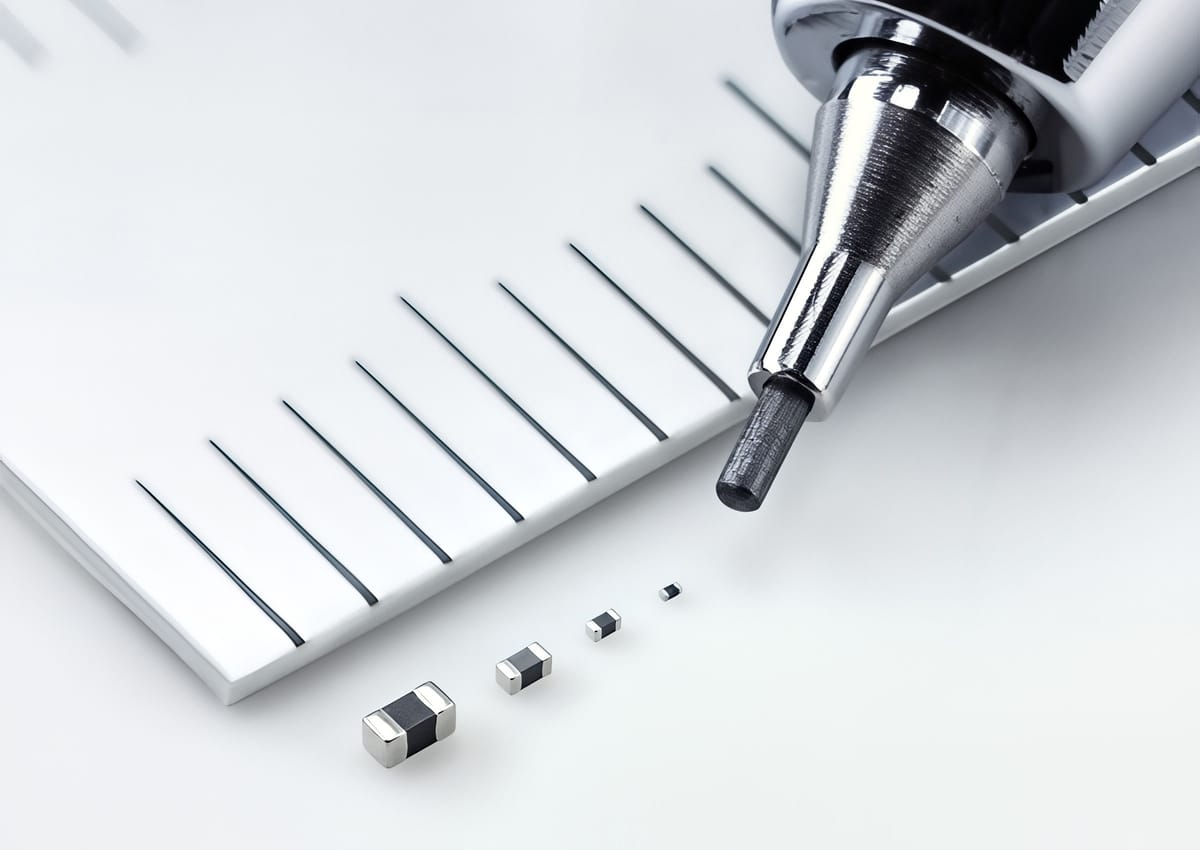
A hidden ceramics empire grows, driven by the AI CapEx cycle

Summary
Murata Manufacturing Co., Ltd. stands as the undisputed global hegemon in the passive electronic components industry, serving as the foundational bedrock for the modern digital economy. The company dominates the market for Multilayer Ceramic Capacitors (MLCCs)—microscopic yet indispensable components essential for regulating electric flow in devices ranging from smartphones and wearables to electric vehicles (EVs) and hyperscale AI servers. Murata distinguishes itself through a radically vertically integrated "black box" manufacturing philosophy, where it controls every stage of production from the synthesis of raw barium titanate powders to the final sintering of components. This deep understanding of material science enables Murata to create components that have more capacitance, take up less space, and are more reliable than those of its competitors, giving it strong control over pricing and a clear advantage in high-end markets.
Economically, Murata is a financially robust industrial giant navigating a complex cyclical transition. While maintaining a pristine balance sheet with a net cash position and low leverage, recent earnings have been obscured by significant goodwill impairments related to its acquisition of Resonant Inc. and inventory adjustments in its cylindrical battery division. Despite these short-term profitability headwinds, the company is capitalizing on a structural super-cycle driven by the "Electrification of Everything," particularly the exponential increase in component density required for AI infrastructure and automotive ADAS systems. Revenue quality is historically high but concentrated in the maturing communications sector; however, a strategic pivot toward "Mobility" and "Compute" is actively diversifying this risk profile.
From an investor's perspective Murata Manufacturing represents the quintessential "Pick-and-Shovel" investment for the 21st-century digital economy. While the recent goodwill impairment regarding Resonant Inc. and the inventory correction in consumer electronics have temporarily obscured its earnings power, the structural story remains intact.The company is effectively pivoting its massive cash flows from the maturing smartphone market into the high-growth arenas of AI infrastructure and Automotive electrification. Its vertical integration provides a durable, verifiable economic moat that protects margins against commoditization in a way that competitors cannot replicate.
1. What They Sell and Who Buys It
Murata Manufacturing operates at the invisible base of the global electronics supply chain. While its brand is rarely seen by the end consumer, its products are omnipresent, embedded within nearly every sophisticated electronic device manufactured today. The company’s product portfolio is characterized by high-volume, precision-engineered ceramic-based electronic components that manage electricity, process signals, and sense environmental changes.
Core Product Portfolio
Multilayer Ceramic Capacitors (MLCCs)
The MLCC is Murata’s flagship product, representing the company's financial and technological engine. An MLCC stores and releases electrical energy to stabilize voltage and flow within circuits, acting as a buffer that protects sensitive semiconductors from power fluctuations.
- Market Dominance: Murata holds a global market share of approximately 40% in MLCCs, a position it has defended for decades against fierce competition from Korean and Taiwanese rivals.
- Technological Segmentation: The portfolio is bifurcated into "General Purpose" and "High Reliability" segments. Murata dominates the high-reliability niche, producing "Class 1" temperature-compensating capacitors and "Class 2" high-dielectric constant capacitors that function in extreme environments. The company is currently pioneering the mass production of 0201-size (0.6mm x 0.3mm) and 01005-size components, enabling the miniaturization of 5G smartphones and wearable devices.
- Innovation: Recent breakthroughs include 1.25kV rated MLCCs designed specifically for Electric Vehicle (EV) On-Board Chargers (OBCs) and silicon carbide (SiC) power supply circuits, addressing the high-voltage requirements of next-generation mobility.
RF (Radio Frequency) Modules and Filters
As a leader in communication technologies, Murata supplies the critical signal processing components that allow wireless devices to connect to networks without interference.
- SAW Filters: Surface Acoustic Wave (SAW) filters are essential for separating specific radio frequencies in mobile devices. Murata is the global leader in this category, leveraging its ceramic and piezoelectric expertise.
- Connectivity Modules: The company integrates Wi-Fi, Bluetooth, and cellular modems into compact modules used in smartphones, IoT devices, and automotive telematics. These modules are critical for "Space-constrained" applications where OEMs prefer a drop-in solution rather than engineering their own RF front ends.
- Strategic Challenges: This segment has faced headwinds due to the technological shift toward higher frequency bands (where Bulk Acoustic Wave or BAW filters are preferred) and the slow adoption of certain high-frequency technologies, leading to impairment losses.
Inductors and EMI Suppression Filters In the densely packed circuitry of modern electronics, electromagnetic interference (EMI) is a constant threat to performance. Murata’s EMI suppression filters and chip inductors manage magnetic fields to ensure signal integrity. Demand for these components is highly correlated with the complexity of the device; a 5G smartphone requires significantly more EMI shielding than a 4G predecessor due to the increased number of antennas and frequency bands.
Power and Energy Solutions
- Lithium-ion Batteries: Murata produces cylindrical lithium-ion batteries, primarily targeting power tools and cleaning appliances. This business was bolstered by the acquisition of Sony’s battery division but has struggled recently with post-pandemic inventory gluts.
- Solid-State Batteries: A key area of future growth, Murata is leveraging its ceramic processing capabilities to develop solid-state batteries. The company has entered a strategic partnership with QuantumScape to mass-produce ceramic separators, a critical component for enabling safe, high-energy-density batteries for EVs.
Sensors Murata manufactures a diverse array of sensors, including ultrasonic, shock, and vibration sensors. These are increasingly vital for the automotive sector, specifically for Advanced Driver Assistance Systems (ADAS) and autonomous driving applications, as well as industrial automation.
Target Customers and Segmentation
Murata’s customer base comprises the world's largest electronics Original Equipment Manufacturers (OEMs), Tier 1 automotive suppliers, and contract manufacturers.
Communications (Smartphones & Handsets)
Historically the largest revenue contributor, this segment includes customers like Apple, Samsung, and major Chinese OEMs (Xiaomi, Oppo, Vivo).
- Motivation: These customers prioritize miniaturization and supply chain reliability. They buy Murata’s smallest capacitors (01005 size) to free up internal volume for larger batteries and additional cameras.
- Dynamics: While volume is high, this market is mature and cyclical. Recent trends show a decline in module sales due to inventory corrections and mix shifts.
Mobility (Automotive)
This is the fastest-growing and most strategic segment for Murata. Customers include Tier 1 suppliers such as Denso, Bosch, and Continental, as well as direct relationships with EV manufacturers like Tesla and BYD.
- Motivation: The automotive industry is undergoing a "CASE" (Connected, Autonomous, Shared, Electric) revolution. An internal combustion engine vehicle uses approximately 3,000 MLCCs, whereas a high-end EV with ADAS capabilities can require between 10,000 to 15,000 units.9 Automotive customers demand "zero defect" reliability and long-term supply guarantees (10+ years), for which they are willing to pay a premium.
- Problem Solved: Murata’s high-voltage and soft-termination MLCCs prevent cracking under mechanical stress and withstand the high temperatures of an EV powertrain.
Computers and Data Centers (AI Infrastructure)
A rapidly expanding segment driven by the explosion of Artificial Intelligence.
- Motivation: AI training and inference servers (using chips from NVIDIA, AMD) consume massive amounts of power and require extreme voltage stability.
- Dynamics: An AI server requires 8x to 10x the number of MLCCs compared to a standard server, with unit counts reaching 25,000 per rack. Murata’s high-capacitance components are critical for the Power Management Units (PMUs) that regulate electricity for GPUs.
2. How They Make Money
Murata’s revenue model is built on the high-volume manufacturing and sale of discrete electronic components. The business operates on a "razor and blade" dynamic where the components are the blades—consumable, essential, and required in massive quantities.
Revenue Model Architecture
Transaction-Based High-Volume Sales
The vast majority of Murata's revenue is derived from the direct sale of components to OEMs and Electronics Manufacturing Services (EMS) providers. The unit economics rely on immense scale; while a single capacitor may sell for fractions of a cent, Murata produces them in the trillions annually. Profitability is a function of maximizing factory utilization (operating leverage) and yield rates.
Vertical Integration and Value Capture
Unlike many competitors who assemble components using materials purchased from third-party chemical suppliers, Murata synthesizes its own raw materials (such as barium titanate) and builds its own production machinery.
- Cost Control: This internal production of key inputs insulates Murata from some upstream commodity price volatility and allows them to capture the margin that would otherwise go to material suppliers.
- Premium Pricing: By controlling the material science, Murata can produce components with specifications (capacitance-to-size ratio) that competitors cannot match. This allows them to charge a premium for "leading-edge" parts while competing on cost for "commodity" parts.
Product Mix Strategy
Murata actively manages its product lifecycle to sustain margins.
- New Introduction Phase: Murata introduces a cutting-edge product (e.g., world's smallest MLCC) at a high margin.
- Mass Adoption Phase: As competitors catch up, prices erode. Murata responds by improving manufacturing efficiency to maintain margins or by shifting capacity to the next generation of smaller/higher-performance products.
- Legacy Phase: Older, larger components are maintained for industrial or automotive clients who value stability over miniaturization, providing a long tail of cash flow.
Revenue Segmentation
Based on financial data from the first nine months of FY2025 and recent reports, Murata’s revenue is categorized into two primary reporting segments:
| Revenue Segment | Share of Total | Description & Performance |
|---|---|---|
| Components | ~60-65% | The Profit Engine. Includes Capacitors (MLCCs) and Inductors. This segment is performing robustly, with revenue increasing by approximately 10% YoY in recent quarters. Growth is driven by the structural demand in AI servers and automotive electrification. |
| Devices & Modules | ~35-40% | The Strategic Enabler. Includes RF Modules, SAW Filters, Connectivity Modules, and Batteries. This segment is currently under pressure, showing a revenue decline of ~7.5% YoY due to weakness in smartphone connectivity modules and inventory adjustments in the battery business. |
Pricing Power and Dynamics
In the passive component industry, "Average Selling Price" (ASP) typically erodes by 5-10% annually for established products. However, Murata has demonstrated an ability to buck this trend during periods of tight supply or high innovation.
- Recent Trends: Due to the surge in silver prices (a key electrode material) and robust demand for high-spec parts in AI and Auto, pricing has stabilized. In some high-voltage categories, Murata has successfully passed on cost increases to customers, evidencing its pricing power in the "High Reliability" segment.
- Strategic Pricing: Murata often uses its scale to aggressively price commodity parts to deter competitors from gaining a foothold, while maintaining high margins on proprietary, hard-to-manufacture components.
3. Quality of Revenue
Murata’s revenue profile is characterized by high quality due to customer entrenchment, though it remains subject to the cyclicality of the global hardware market.
Predictability and Customer "Lock-In"
Design-In Stickiness
While sales are technically transactional, Murata benefits from high switching costs known as "design-in" wins.
- The Mechanism: When an automotive engineer designs an Electronic Control Unit (ECU) for a car, they specify a particular Murata capacitor part number. Once the design is certified (a process taking months or years), that specific component is "locked in" for the life of the vehicle platform (often 5-7 years).
- Implication: This creates a recurring-like revenue stream. An OEM cannot easily swap out Murata for a cheaper competitor without re-certifying the entire safety system, which is cost-prohibitive. This visibility is significantly higher in the Automotive/Industrial segments than in Consumer Electronics.
Diversification
Application Diversification
Murata has successfully reduced its reliance on the volatile smartphone market.
- Communications: ~35-40% of revenue. Still the largest single exposure, but declining in relative terms.
- Mobility (Automotive): ~25% and growing. This segment provides counter-cyclical stability against consumer electronics downturns.
- Computers/Industrial: ~35%. This segment is experiencing a renaissance due to the capital expenditure boom in AI data centers.
Geographic Concentration
- Greater China Exposure: Approximately 50-55% of Murata’s revenue is billed to customers in Greater China.
- Nuance: This figure represents the location of manufacturing (assembly plants of Apple, Dell, etc.) rather than end-market consumption. However, it exposes Murata to significant supply chain risks related to US-China trade tensions and potential tariffs.
- Global Footprint: To mitigate this, Murata maintains a diversified manufacturing footprint with major plants in Japan (Fukui, Izumo), the Philippines, Thailand, and Vietnam.
Economic Sensitivity
Cyclicality
The business is inherently cyclical, tied to the global demand for hardware.
- Current Cycle: Murata is emerging from a "down" cycle caused by the post-COVID inventory correction in PCs and smartphones.
- Resilience: The divergence in recent performance—where consumer modules declined while infrastructure components rose—demonstrates the improved resilience of the portfolio compared to previous cycles where all segments moved in tandem.
4. Cost Structure
Murata’s cost structure reflects its status as a capital-intensive manufacturer with a heavy commitment to Research and Development (R&D).
Key Cost Components
Cost of Goods Sold (COGS)
- Raw Materials: The primary cost driver is raw materials, specifically titanium, barium, and conductive metals like nickel and silver.
- Hedging Strategy: Murata manages this volatility through long-term contracts and joint ventures. For instance, it established a joint venture with Ishihara Sangyo to manufacture barium titanate, securing a stable supply of its most critical input.
- Silver Impact: The recent surge in silver prices has put upward pressure on manufacturing costs for electrodes, necessitating price adjustments.
- Depreciation: Murata invests heavily in proprietary kilns and production lines. Consequently, depreciation is a significant fixed cost component. This high fixed-cost base creates substantial operating leverage: when volumes are high, unit costs drop precipitously, boosting margins.
Research and Development (R&D)
- Commitment: Murata consistently invests approximately 6-7% of its revenue into R&D (roughly ¥100-140 billion annually).
- Focus: This spending is non-negotiable and is directed toward material science (developing new ceramics), process engineering (new sintering methods), and 6G/solid-state battery technologies. This high R&D intensity acts as a barrier to entry, as few competitors can match this absolute dollar amount of investment.
Labor and Manufacturing
- Workforce: The company employs nearly 77,000 people globally. While manufacturing involves high-tech automation, it still requires a significant skilled workforce.
- Wage Inflation: Rising labor costs in Japan and China are a structural headwind, driving the company to automate further and expand production in lower-cost regions like Vietnam and the Philippines.
Margins and Scalability
Gross Margins Murata historically maintains gross margins in the range of 38-42%. This is exceptionally high for a hardware manufacturer and is a testament to its value-add and vertical integration. In contrast, many assembly-based competitors struggle to exceed 25%.
Operating Margins
- Target: The company targets an operating margin of 20%+.
- Current Status: Operating margins have recently been compressed to the mid-teens (~16-18% adjusted) due to lower utilization rates and impairment charges.
- Outlook: As factory utilization improves with the recovery in demand (driven by AI and Auto), margins are expected to expand rapidly due to the high fixed-cost nature of the business.
5. Capital Intensity
Murata operates a capital-intensive business model that requires continuous reinvestment to maintain its technological lead and capacity.
Asset Requirements
Manufacturing Base Murata’s competitive advantage is physically grounded in its factories. It operates over a dozen major manufacturing sites in Japan (including the key Fukui and Izumo plants) and nine overseas affiliates.
- Specialized Equipment: The production of high-end MLCCs requires massive, customized sintering kilns that can control temperatures within fractions of a degree. Murata designs and builds much of this equipment in-house, preventing competitors from simply buying the same machines to replicate their process.
CapEx Cycle
Current Investment Phase
The company is currently in an active CapEx cycle, investing aggressively to prepare for the medium-term demand surge from EVs and AI.
- Expansion Areas: Investments are focused on increasing capacity for Multilayer Resin Substrates, large-case MLCCs for automotive applications, and pilot lines for solid-state batteries.
- Impairments: The recent massive impairment (~¥43-49 billion) related to manufacturing machinery for cylindrical batteries indicates a misallocation of capital in that specific niche. The company over-invested based on pandemic-era demand for power tools which subsequently evaporated, leading to idle assets.
Working Capital and Cash Conversion
- Inventory: The "bullwhip effect" of the pandemic led to bloated inventories across the supply chain. Murata has been working down this inventory, which temporarily depresses cash conversion efficiency. However, the company historically exhibits strong cash flow generation due to its high margins.
6. Growth Drivers
Murata’s future revenue growth is underpinned by three structural "megatrends" that are increasing the electronic component content per device, decoupling Murata’s growth from mere unit sales of end products.
1. AI Infrastructure Supercycle (Structural, Long-Term)
The build-out of Artificial Intelligence data centers represents a massive new demand vector.
- Mechanism: AI training clusters (utilizing GPUs like NVIDIA’s Blackwell) are power-hungry beasts that require extreme current stability. "Voltage droop" can cause calculation errors, so massive banks of capacitors are required to act as energy reservoirs.
- Quantifiable Impact: While a standard server might use ~3,000-5,000 MLCCs, an AI server rack can utilize 15,000 to 25,000 high-end MLCCs.
- Forecast: Murata projects that MLCC demand specifically for AI servers will triple by FY2030 compared to FY2025 levels. Additionally, the company aims to generate ¥50 billion in sales from new power modules designed for these servers by FY2027.
2. Automotive Electrification (Structural, Long-Term)
The transition from Internal Combustion Engines (ICE) to Electric Vehicles (EVs) is the single largest volume driver for the passive component industry.
- The Multiplier Effect: EVs require high-voltage power electronics (inverters, BMS, OBCs) that ICE cars simply do not have. This drives a 3x-5x increase in MLCC volume per vehicle.
- Value over Volume: Beyond just unit counts, the value per component is higher. Automotive-grade MLCCs must withstand 125°C+ temperatures and 800V+ architectures, commanding higher prices and margins than consumer-grade parts.
- Status: Despite short-term fluctuations in EV adoption rates in Western markets, the long-term trend remains robust, particularly driven by Chinese EV manufacturing where Murata is deeply embedded.
3. 6G and Next-Gen Connectivity (Medium-Term)
As wireless standards evolve toward 6G (expected commercialization ~2030), frequencies will shift to the sub-THz range.
- Drivers: This shift necessitates new types of filters and antenna modules. While the current 5G cycle is maturing, the complexity of the RF Front End (RFFE) continues to increase, requiring more integrated modules—a forte of Murata’s "MetroCirc" and resin substrate technologies.
7. Competitive Advantages (Moat)
Murata possesses a "Wide Moat" derived from a combination of intangible assets (proprietary technology) and cost advantages (scale).
1. Vertical Integration and Material Science
The "Black Box" Approach:
Murata’s most durable advantage is its vertical integration. While many competitors purchase ceramic powders from third-party chemical companies (like Sakai Chemical), Murata produces its own barium titanate and other dielectric materials internally.
- Why It Matters: The performance of a capacitor is determined by the thinness and uniformity of its dielectric layers. By controlling the particle size of the powder at the nano-level, Murata can create layers that are thinner (sub-micron) and more uniform than competitors. This allows them to pack more capacitance into a smaller volume (e.g., 100μF in a 1206 case) without sacrificing reliability.
- Verifiable Evidence: This technological lead is evidenced by Murata’s consistent ability to be the first to market with new miniaturized sizes (e.g., 0201 high-cap) and its sustained gross margins of ~40%, which are significantly higher than non-integrated peers.
2. Economies of Scale
The Volume Leader: With a 40% global market share in MLCCs, Murata operates at a scale that dwarfs its rivals.
- Cost Advantage: This scale allows Murata to spread its massive fixed costs (R&D, depreciation of kilns) over a larger unit base, resulting in a lower unit cost than any competitor.
- Strategic Use: This low cost base allows Murata to act as a formidable gatekeeper. If a competitor tries to undercut them in the low-end market, Murata can lower prices to match while still remaining profitable, effectively starving the competitor of the margins needed to invest in R&D.
3. Supply Chain Entrenchment (Switching Costs)
Risk Aversion:
For an automotive or medical device manufacturer, the cost of a passive component is negligible compared to the cost of failure.
- The "5-Cent Component" Problem: A $0.05 capacitor failing can brick a $1,000 smartphone or cause a $50,000 car to be recalled. Consequently, engineers are extremely risk-averse. They prefer to stick with the industry standard (Murata) rather than risk their product’s reliability to save fractions of a penny with a Tier 2 supplier. This creates immense inertia and customer loyalty.
8. Industry Structure and Position
Industry Value Chain
The passive component industry value chain consists of:
- Raw Materials: Mining of titanium, nickel, and rare earths.
- Material Processing: Synthesis of ceramic powders (Murata does this internally).
- Component Manufacturing: Sintering and assembly (Murata’s core). Source of Profit: Value capture is highest here due to process IP.
- Distribution: Sales through distributors like Avnet, Arrow, or direct to large OEMs.
- End Users: Automotive, Consumer, Industrial OEMs.
Market Structure
The market is a consolidated oligopoly at the high end, and fragmented at the low end.
- Consolidation: The top five players—Murata, Samsung Electro-Mechanics (SEMCO), Taiyo Yuden, TDK, and Yageo—control over 70-80% of the global market.
- Competitive Dynamics:
- Murata (Japan): The undisputed leader across all segments.
- SEMCO (Korea): The closest challenger, strong in consumer/IT but trailing in automotive.
- Taiyo Yuden (Japan): High-end specialist, strong technology but smaller scale.
- Yageo (Taiwan): Aggressive consolidator, strong in commodity segments and distribution.
Murata's Position
- Rank: Global #1 in MLCCs and SAW Filters.
- Role: Murata acts as the Price Setter in high-end segments (Auto, AI) and the Technology Pacesetter for the industry. In commodity segments, it acts as a stabilizing force.
- Market Share: Estimates place Murata at ~40% of the MLCC market, significantly ahead of SEMCO (~24%) and others.
9. Unit Economics and Key Performance Indicators
Key Performance Indicators (KPIs)
Average Selling Price (ASP)
- Trend: The industry generally faces a 5-10% annual ASP decline for "legacy" parts as they become commoditized.
- Counter-Trend: Murata fights gravity through "Mix Shift." By constantly shifting sales toward newer, automotive-grade, and AI-grade components, the company’s blended ASP remains stable or even increases.
- Current Dynamic: Reports indicate that ASPs for high-end MLCCs are currently firming up due to tight supply for AI servers and rising silver costs, which is a net positive for revenue quality.
Book-to-Bill Ratio
- Significance: This ratio measures demand (orders) relative to supply (billed revenue). A ratio > 1.0 indicates expansion.
- Status: Recent channel checks suggest the ratio is improving (>1.0) for AI and Automotive components, signaling the start of a new growth cycle, while consumer modules remain softer (<1.0).
Factory Utilization Rate
- Economics: Because fixed costs (depreciation) are so high, profitability is highly sensitive to utilization.
- Current State: Utilization dropped to ~80-85% during the recent inventory correction but is climbing back toward the optimal 90-95% range. As it crosses 90%, operating margins historically expand rapidly (operating leverage).
Inventory Turnover
- Challenge: Turnover has been lower than historical averages recently due to the "inventory adjustment" described in Q3 FY2025 results. The company is actively working through excess stock of consumer-grade parts to normalize this metric.
10. Capital Allocation and Balance Sheet
Murata’s financial management follows a traditional Japanese "Kyoto-style" conservatism—prioritizing balance sheet fortitude and long-term survival—but has recently pivoted toward more shareholder-friendly policies.
Balance Sheet Strength
- Fortress Balance Sheet: Murata maintains a massive net cash position. As of late FY2025, cash and cash equivalents stood at approximately ¥582 billion.
- Leverage: The company is virtually debt-free in net terms, with a Debt-to-Equity ratio of just 0.02. This allows Murata to weather deep industry downturns that might bankrupt highly levered competitors like Yageo.
- Liquidity: The current ratio is a robust 5.52, indicating ample liquidity to cover short-term obligations.
Capital Allocation Strategy
1. Organic Growth (Priority #1)
The primary use of cash is CapEx to expand production capacity and R&D. The company invests aggressively even during downturns to ensure it has capacity ready for the next upswing.
2. Strategic Acquisitions (M&A)
Murata has a mixed track record with M&A.
- Success: The acquisition of Sony’s battery business solidified its position in energy storage.
- Failure: The acquisition of Resonant Inc. (for RF filter IP) resulted in a massive goodwill impairment in FY2025 (~¥43 billion). The technology failed to gain commercial traction against incumbents, representing a destruction of shareholder value. This failure highlights the risks of acquiring unproven IP versus developing it internally.
3. Shareholder Returns
Management has become more vocal about returning excess capital to shareholders.
- Total Return Ratio: The company has set a target "Total Return Ratio" (Dividends + Buybacks) of roughly 35-47%.
- Dividends: Murata is a consistent dividend grower. The current yield is approximately 1.8% - 2.1%.
- Buybacks: The company recently completed a substantial share buyback program of 34 million shares (~¥80 billion), signaling management's view that the stock was undervalued during the inventory correction.
11. Risks and Sources of Error
1. Technological Displacement (The "Resonant" Lesson)
- Risk: The passive component industry is generally slow-moving, but the RF module segment is fast. The impairment of Resonant Inc. underscores the risk that new technologies (like BAW filters or integrated modem solutions from Qualcomm) could displace Murata’s discrete components.
- Scenario: If smartphone OEMs move to fully integrated RF front-ends that exclude discrete SAW filters, Murata could lose a significant high-margin revenue stream.
2. Geopolitical and Supply Chain Decoupling
- Risk: Murata is heavily entangled with the Chinese supply chain (both for raw materials and customer assembly).
- Scenario: An escalation of US-China trade tensions involving tariffs on electronics or restrictions on Japanese exports to China could severely disrupt Murata’s operations. If Apple accelerates its move of iPhone assembly to India, Murata must rapidly shift its own logistics and support, which incurs cost and execution risk.
3. Inventory Cycles (The Bullwhip Effect)
- Risk: The industry is notorious for boom-bust cycles. Customers often "double order" during shortages, leading to a phantom demand spike followed by a crash when they cancel orders.
- Status: We are currently exiting a bust. The risk is that the current AI demand is also being double-ordered, leading to another glut in 2027.
4. Forex Sensitivity
- Risk: As a major exporter reporting in Yen, currency fluctuations impact reported earnings.
- Sensitivity: A ¥1 depreciation of the Yen against the USD typically boosts operating profit by approximately ¥2-3 billion. Conversely, a strengthening Yen (e.g., if the BOJ raises rates aggressively) acts as a headwind to reported profits.
12. Valuation and Expected Return Profile
Current Valuation Landscape
Murata is currently trading at a valuation that reflects a mix of its high quality and the temporary earnings depression caused by impairments.
- P/E Ratio (TTM): Approximately 23.7x - 26.3x.
- Forward P/E: Estimated at ~18.5x based on FY2026 earnings recovery expectations (normalizing for the absence of impairment charges).
- Peer Comparison:
- Premium: Murata trades at a significant premium to the Japanese electronic sector average (~15x) and peers like TDK (~21x) and Kyocera.
- Justification: This premium is warranted by its higher operating margins (~18-20% normalized vs. peers' 8-10%), dominant market share, and superior balance sheet.
- Discount: It trades at a discount to global high-growth tech compounding peers (often 30x+), suggesting the market still views it as a cyclical hardware stock rather than a secular growth story.
Scenario Framework (FY2026-2027 Outlook)
| Scenario | Probability | Assumptions | Implied Valuation / Upside |
|---|---|---|---|
| Bear Case | 20% | Global recession hits automotive demand; AI server build-out proves to be a bubble; Yen strengthens significantly to ¥120/USD. Margins compress to <15%. | Downside ~20%Multiple compresses to 15-16x on lower earnings. Price target ~¥2,200. |
| Base Case | 50% | Automotive demand recovers moderately; AI demand remains robust; Smartphone market is flat/stable. Margins recover to 18-19% as impairments roll off and utilization improves. | Upside ~10-15%Fair value P/E ~24x on recovering earnings. Price target ~¥3,100 - ¥3,200. |
| Bull Case | 30% | "AI Supercycle" accelerates demand for high-margin MLCCs; EV adoption re-accelerates; Solid-state battery partnership with QuantumScape achieves mass production milestones. Margins expand to >22%. | Upside ~30-40%Market re-rates stock as a critical "AI Infrastructure" play (P/E 28x+). Price target ~¥3,800+. |
Assessment: The stock appears Fairly Valued to Slightly Undervalued. The current price reflects the earnings trough (impairment hit) but likely underestimates the operating leverage from the AI/Auto recovery in FY2026.
13. Catalysts and Time Horizon
Short-Term Catalysts (0-12 Months)
- Earnings Normalization: The most immediate catalyst is the mechanical bounce in EPS in FY2026 as the ¥43 billion impairment charge drops out of the year-over-year comparables. This will optically lower the P/E ratio, making the stock appear cheaper to quantitative screens.
- iPhone 17/18 Cycle: Any news regarding increased RF content or new form factors in the next iPhone cycle (expected Sept 2026) will drive sentiment for the Modules business.
Medium-Term Catalysts (1-3 Years)
- AI Server Volume Ramp: The market is currently pricing in the start of the AI cycle. The real revenue acceleration will occur when AI data centers move from "training" (fewer, expensive systems) to "inference" (mass deployment). As Murata’s specific AI-power modules and high-cap MLCCs gain share in this ramp, revenue growth could surprise to the upside.
- Solid-State Battery Milestones: The partnership with QuantumScape is a "call option" on the future of energy. Successful pilot production (expected 2025/2026) or a commercial supply agreement for ceramic separators would be a massive re-rating event, shifting the narrative from "legacy component maker" to "green tech leader".
References
- What is Competitive Landscape of Murata Manufacturing Company? - PESTEL Analysis, Accessed February 1, 2026, https://pestel-analysis.com/blogs/competitors/murata
- Multilayer Ceramic Capacitor (MLCC) Market Report 2030 - Mordor Intelligence, Accessed February 1, 2026, https://www.mordorintelligence.com/industry-reports/multi-layer-ceramic-capacitor-mlcc-market
- Murata Unveils World's First 15nF/1.25kV C0G MLCC in 1210-inch Size, Accessed February 1, 2026, https://www.murata.com/en-us/news/capacitor/ceramiccapacitor/2025/1202
- Consolidated Financial Results for the Year Ended March 31, 2025, Accessed February 1, 2026, https://finance-frontend-pc-dist.west.edge.storage-yahoo.jp/disclosure/20250430/20250429526957.pdf
- Murata Manufacturing lifts full-year revenue guidance on AI demand - Fintel, Accessed February 1, 2026, https://fintel.io/news/murata-manufacturing-lifts-full-year-revenue-guidance-on-ai-demand-8184
- QuantumScape Successfully Accomplishes Annual Commercial Engagement Goal, Accessed February 1 2026, https://ir.quantumscape.com/news-releases/news-release-details/quantumscape-successfully-accomplishes-annual-commercial
- QuantumScape partners with specialist Murata - electrive.com, Accessed February 2, 2026, https://www.electrive.com/2025/04/25/quantumscape-partners-with-ceramics-specialist-murata/
- Full Year Performance Briefing - TDK Corporation, Accessed February 2, 2026, https://www.tdk.com/system/files/2025_4q00_09YwIctV_en_02.pdf
- [News] Murata Predicts AI server-related MLCC Demand to Double, Sparking Market Rebound in 2025 - TrendForce, Accessed February 2, 2026, https://www.trendforce.com/news/2025/02/06/news-murata-predicts-ai-server-related-mlcc-demand-to-double-sparking-market-rebound-in-2025/
- Top Companies List of Multilayer Ceramic Capacitor Industry - MarketsandMarkets, Accessed February 2, 2026, https://www.marketsandmarkets.com/ResearchInsight/multilayer-ceramic-capacitor-market.asp
- Murata to mass-produce VPD power modules for AI servers in 2026 - Digitimes, Accessed February 2, 2026, https://www.digitimes.com/news/a20251217PD230/murata-2026-ai-server-production-business.html
- Murata Manufacturing (MRAAY) Reports 2.9% Revenue Growth in Nine - GuruFocus, Accessed February 2, 2026, https://www.gurufocus.com/news/8571886/murata-manufacturing-mraay-reports-29-revenue-growth-in-ninemonth-period
- How Metal Prices Are Driving Passive Component Price Hikes, Accessed February 2, 2026, https://passive-components.eu/how-metal-prices-are-driving-passive-component-price-hikes/
- Passive Components Price Hikes in 2026: Causes, Scope, and Industry Outlook, Accessed February 2, 2026, https://www.axtekic.com/news/passive-components-price-hikes-in-2026:-causes,-scope,-and-industry-outlook.html
- Murata Manufacturing Co., Ltd. Revenue Breakdown – TSE:6981 - TradingView, Accessed February 2, 2026, https://www.tradingview.com/symbols/TSE-6981/financials-revenue/
- Integrated Report 2024, Accessed February 2, 2026, https://www.hirata.co.jp/files/uploads/HRT_IR24_EN_1227_%E8%A6%8B%E9%96%8B%E3%81%8D.pdf
- Value Creation Strategies, Accessed February 2, 2026, https://www.iskweb.co.jp/eng/ir/pdf/2023_02.pdf
- Murata Manufacturing Co Ltd Peers & Key Competitors - GlobalData, Accessed February 2, 2026, https://www.globaldata.com/company-profile/murata-manufacturing-co-ltd/competitors/
- Murata Manufacturing Gross Margin 2013-2025 | MRAAY - Macrotrends, Accessed February 2, 2026, https://www.macrotrends.net/stocks/charts/MRAAY/murata-manufacturing/gross-margin
- Murata Manufacturing (6981) Investor Relations, Earnings Summary & Outlook - Quartr, Accessed February 2, 2026, https://quartr.com/companies/murata-manufacturing-co-ltd_15060
- Solid-state battery investments continue to grow across the auto industry, Accessed February 2, 2026, https://news.dealershipguy.com/p/solid-state-battery-investments-continue-to-grow-across-the-auto-industry-2025-07-23
- Multilayer Ceramic Capacitor Market: Continuous Innovation, Accessed February 2, 2026, https://www.maximizemarketresearch.com/market-report/global-multilayer-ceramic-capacitor-market/28947/
- Chinas MLCC Makers Reach 10% Market Share - passive-components.eu, Accessed February 2, 2026, https://passive-components.eu/chinas-mlcc-makers-reach-10-market-share/
- Notice of Convocation of the 144th Ordinary General Meeting of Shareholders, Accessed February 2, 2026, https://xml.irpocket.com/C3405/enconvocationnotice144th.pdf
- Fiscal Year March 2025 Full Year Performance Briefing - TDK Corporation, Accessed February 2, 2026, https://www.tdk.com/en/ir/ir_events/conference/2025/4q_2.html