
Drax Group plc
The Drax Group is a company in the European energy sector that tends to be misunderstood by the capital market. While the market primarily sees risks, the company is delivering record cash flows, reducing debt, and aggressively buying back its own shares.
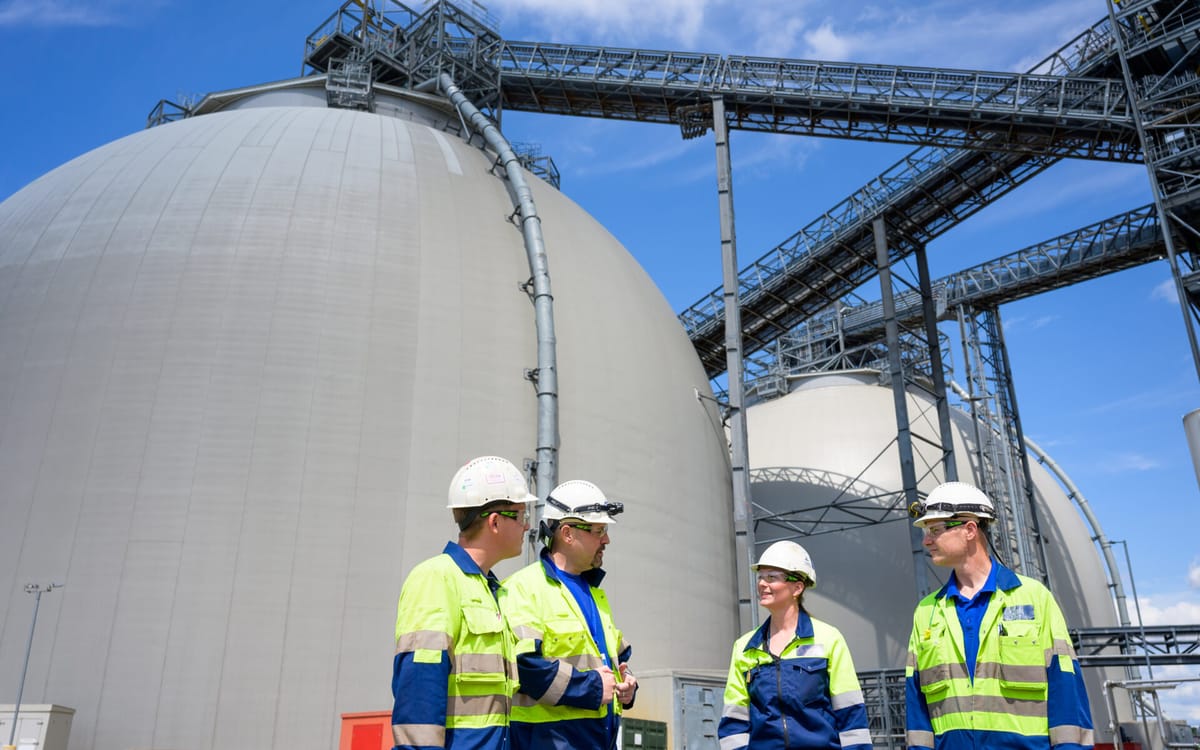
From coal-fired power plant to carbon capture specialist

Summary
At the end of the 2025 financial year, Drax Group plc will present itself as a fundamentally transformed energy company that has completed the critical transition from a fossil fuel supplier to a central pillar of the British and increasingly global infrastructure for renewable energies and carbon dioxide removal (CDR). This analysis examines the company, including recent developments, in particular the strategic agreement on the Low Carbon Dispatchable Contract for Difference (CfD) and the operational expansion in North America.
At the heart of the investment thesis is the observation that the market continues to value Drax Group primarily as a traditional electricity generator, while the company is in fact evolving into a technology and logistics group for negative emissions. With adjusted EBITDA of £1,064 million in fiscal year 2024 and a forecast at the upper end of expectations for 2025 (£902 million consensus), Drax is demonstrating remarkable financial robustness. The balance sheet has been strengthened by aggressive deleveraging to a net debt to EBITDA ratio of 0.9x, which is well below the long-term target range and creates significant scope for capital returns and growth investments.
The following analysis breaks down the business model into its constituent parts, examines the quality of revenue streams through the 2030s, and assesses the risks of investing in a highly politically sensitive sector.
1. Products and business model
The Drax Group's business model is vertically integrated and divided into operating segments that work together synergistically to create value along the entire biomass supply chain – from forestry residue utilization to the provision of system services for the national power grid.
1.1 Pellet Production: The foundation of the supply chain
The Pellet Production segment forms the strategic backbone of the Group. It not only secures the fuel supply for its own power plants, but is also increasingly functioning as an independent profit center in the global market.
Operational structure and capacity:
Drax operates a network of 17 pellet plants in North America, with a focus on the southeastern United States (Alabama, Louisiana) and western Canada (British Columbia). Installed production capacity is approximately 5 million tons (Mt) per year. In 2024, production increased to 4.0 Mt (2023: 3.8 Mt), with shipping volume reaching 5.1 Mt. This discrepancy between production and shipping is offset by trading third-party volumes, which opens up additional arbitrage opportunities for Drax in the global biomass market.
Strategic development:
A key milestone was the commissioning of the expansion at the Aliceville (Alabama) site in the first half of 2024, which delivered 130,000 tons (kt) of additional capacity. At the same time, Drax is pushing ahead with the development of a new plant in Longview, Washington State, which is targeting a capacity of 450 kt and is intended to facilitate access to Asian markets across the Pacific.
Sales markets:
Around 60% of the pellets produced are supplied internally to the Drax Power Station ("own use"), which serves as a natural hedge against price fluctuations on the global fiber market. The remaining 40% is sold to third parties in Europe and Asia, particularly Japan, where demand for biomass for co-firing in coal-fired power plants is increasing.
1.2 Biomass Generation: System-relevant base load
The heart of the generation capacity is the Drax Power Station in Selby, North Yorkshire. The plant has undergone a metamorphosis from the largest coal-fired power station in Western Europe to the largest single site for renewable energy in the United Kingdom.
Technical specifications:
The power plant has four biomass units (Units 1-4) with a total capacity of approximately 2.6 GW.7 These units differ fundamentally from intermittent renewable sources such as wind and solar because they are dispatchable. They provide inertia and reactive power, which are essential for the frequency stability of the grid.
Market role and output:
In 2024, the plant generated 14.6 TWh of electricity, an increase of 27% compared to 2023.9 This increase was directly attributable to periods of low wind power generation ("dark doldrums") when Drax had to step in. At peak times, Drax covers up to 11% of the UK's renewable electricity supply. This underscores the plant's role as an insurance policy for the UK's security of supply.
1.3 Flexible Generation & Energy Solutions
This segment comprises flexible assets beyond biomass and the end customer business.
Pumped Storage & Hydro:
Drax owns the Cruachan pumped storage power station in Scotland ("Hollow Mountain") and the Lanark and Galloway Hydro Schemes. Cruachan (440 MW) acts as a giant battery, storing excess electricity and feeding it into the grid within seconds when needed. These assets provide essential system services such as black start capability.
Open Cycle Gas Turbines (OCGTs):
To further diversify, Drax is developing three OCGT plants in England and Wales with a total capacity of approximately 900 MW. These plants are designed to operate in the capacity market and only run during periods of extreme grid stress.
Energy Solutions (customers):
The customer business underwent radical restructuring in 2024/2025. Drax sold the majority of the Opus Energy brand's small and medium-sized enterprise (SME) business to EDF in order to focus entirely on the industrial and commercial (I&C) segment. This strategic withdrawal from the volatile SME market, which carried high risks of bad debt, sharpens the profile towards stable margins and the sale of 100% renewable electricity and EV services to large customers.
1.4 Carbon Removals (Elimini)
With the establishment of its subsidiary Elimini, Drax has institutionalized its ambitions in the field of Bioenergy with Carbon Capture and Storage (BECCS). Elimini operates separately and aims to tap into global markets for carbon removal by exporting Drax's technological expertise and developing projects in the US.
2. Revenue analysis
The Drax Group's revenue structure (£6,163 million in 2024) is highly complex, resulting from a mix of different regulatory support mechanisms. However, the analysis shows a clear path to increased predictability into the 2030s.
2.1 Regulatory mechanisms in transition
Drax currently operates under a hybrid model, which will consolidate from 2027:
- Renewables Obligation (RO): Until March 31, 2027, biomass blocks 2 and 3 and parts of the hydroelectric power plants will receive revenue through ROCs (Renewable Obligation Certificates). These certificates are redeemed in addition to the market price of electricity and represent a significant, inflation-indexed source of revenue.
- Contract for Difference (CfD): Block 1 operated under a CfD until 2022.
- Capacity Market: The OCGTs and Cruachan receive payments for the mere provision of capacity, regardless of generation. These contracts often run for 15 years (for new plants) and provide a long-term revenue base.
2.2 The Low Carbon Dispatchable CfD (2027-2031)
The decisive turning point for the investment story is the agreement with the UK government (LCCC) in November 2025 on a transition mechanism after the ROCs expire.
| Feature | Details of the new CfD |
|---|---|
| Term | April 2027 to March 2031 |
| Scope | All four biomass units |
| Strike price | £109.90/MWh (in 2012 prices), CPI-indexed |
| Strike price (2024 real) | Approx. £157/MWh |
| Mechanism | Generation collar of 6 TWh/year |
Implications: This contract eliminates the long-feared "revenue cliff" in 2027. It secures Drax a guaranteed price for 6 TWh of its production. Importantly, Drax can continue to sell volumes above this collar on the merchant market, creating an asymmetric risk profile: downside protection, upside participation (in times of high prices).
2.3 Forward hedging & sales positions
Drax pursues a conservative hedging strategy to protect cash flows against the volatility of wholesale prices. As of December 2025, the hedge book is as follows:
- 2025: RO generation is fully hedged (10.7 TWh) at an average price of £117.1/MWh.
- 2026: A high level of hedging of 10.9 TWh at an average price of £76.7/MWh.
- 2027: 2.2 TWh have already been sold at £79.4/MWh.
The decline in the average price from 2025 to 2026 (£117 to £76) reflects the normalization of European energy markets after the crisis. Nevertheless, these prices are well above the historical averages prior to 2021, reflecting the structurally higher energy costs in the system.
2.4 Revenue from the pellet segment
Drax is targeting recurring EBITDA of over £250 million for the pellet business after 2027. A growing revenue stream is expected from the sustainable aviation fuel (SAF) market. A letter of intent (Heads of Terms) with Pathway Energy provides for the supply of 1 Mt of biomass per year from 2029 for SAF production in Texas. This would open up a new, high-value sales market beyond power generation.
3. Quality of assets
The quality of Drax's assets is defined not only by their technical condition, but primarily by their strategic indispensability ("irreplaceability") in the UK grid.
3.1 Dispatchability as a quality feature
In a grid increasingly dominated by volatile wind power, the value of dispatchable power is rising. Data from H1 2025 impressively confirms this: when low wind speeds dampened renewable production, Drax had to step in. The ability to produce regardless of the weather gives Drax's assets a quality that pure wind or solar farms lack. This is particularly true of the Cruachan pumped storage power plant, whose geological characteristics (height difference, cavern) are virtually impossible to replicate.
3.2 Sustainability and regulatory integrity
The quality of the biomass used was subject to intensive scrutiny.
Ofgem investigation (2024/2025): The UK regulatory authority Ofgem investigated Drax's data reporting (profiling data) for the 2021/2022 compliance period.
- Result: The investigation ended with Drax paying £25 million into a voluntary fund.
- Significance: Ofgem confirmed that the errors were "technical in nature" and that there was no evidence that ROCs (subsidies) had been issued incorrectly. Although Drax accepted deficiencies in governance, the "clean bill of health" regarding subsidy eligibility is crucial for the long-term investment thesis. It eliminates the risk of a retroactive claim for billions of pounds.
3.3 Receivables quality in the customer business
The sale of the SME portfolio to EDF has massively improved the quality of receivables in the Energy Solutions segment. Industrial customers (I&C) typically have a higher credit rating. This is reflected in the reduction in provisions for bad debts, which fell to 1.0% of revenue as early as 2023. The exit from the gas business also reduces the risk of volatile commodity prices in customer contracts.
4. Cost structure
Drax's cost base is subject to global influences, particularly in the pellet supply chain and regulatory levies.
4.1 Biomass supply chain
The all-in contracted cost for biomass for power generation was over £100/MWh in 2023. These costs are composed of:
- Fiber costs: Purchase of wood residues in USD/CAD.
- Processing: Energy costs in pellet plants.
- Logistics: Rail transport in the US, sea freight to the UK, rail transport in the UK.
Drax has managed to increase efficiency in pellet production. EBITDA per ton produced rose from £23 (2023) to £36 (2024). This suggests that economies of scale (such as the Aliceville expansion) and process optimizations have more than offset inflationary pressures.
4.2 Electricity Generator Levy (EGL)
A significant burden on the cost structure was the introduction of the EGL ("windfall tax") by the UK government.
- Impact: In 2024, the tax burden amounted to £161 million (2023: £205 million).
- Outlook: This tax expires on March 31, 2028. The elimination of this special tax will automatically catalyze margin expansion in 2028, provided that realized electricity prices remain above the tax-free base amount (£75/MWh).
4.3 Currency risk
As a large proportion of costs are incurred in foreign currencies (USD, CAD) but revenues are generated in GBP, the currency risk is immense. Drax uses extensive FX forwards to mitigate this risk until 2029. The costs of this hedging are included in operating expenses.
5. Capital structure and balance sheet (capital)
Drax has undergone aggressive balance sheet restructuring over the past 24 months, putting the company in a position of strength.
5.1 Debt and leverage
As of December 31, 2024, Drax presented the following key figures:
- Net debt: £992 million (down from £1,220 million in 2023).
- Leverage ratio: The ratio of net debt to adjusted EBITDA improved significantly to 0.9x (from 1.2x in 2023).
This is a remarkably low figure for a capital-intensive infrastructure group. The self-imposed target is approximately 2.0x, which means that Drax has "untapped balance sheet capacity" that could be used for M&A or further share buybacks.
5.2 Debt maturity profile
Management has proactively smoothed and extended the debt maturity profile to minimize refinancing risks in the current high-interest environment.
Key refinancing measures in 2024/2025:
- Taking out new term loans (£442 million) with maturities from 2027 to 2029.
- Issue of a €350 million bond maturing in 2029.
- Early repayment of the $500 million USD bond (due in 2025) and parts of the Euro bonds.
- Repayment of the £120 million collateral facility in July 2024.
Result: There are no more significant maturities in 2025 and 2026. The large blocks will not mature until 2027, which correlates perfectly with the start of the new CfD contract.
5.3 Liquidity
At the end of the first half of 2025, Drax had total liquidity (cash + unused credit lines) of £726 million. The £450 million revolving credit facility (RCF) is undrawn and has been extended until 2028, with an option to extend until 2029.
6. Growth prospects
Drax's growth will be driven less by volume growth in electricity generation and more by technological upgrades (BECCS) and geographical expansion.
6.1 UK BECCS: The national champion
Drax plans to retrofit two biomass units with carbon capture and storage (CCS) technology.
- Target: Removal of 8 Mt CO2 per year by 2030.
- Prerequisite: Clarity on the transport and storage infrastructure (T&S) in the Humber region (Viking CCS/East Coast Cluster).
- Status: The CfD contract until 2031 serves as a "bridge." The final investment decision (FID) for the full BECCS project is expected once the government has finalized the T&S process.
6.2 Global BECCS & Elimini: The US focus
The founding of Elimini signals a strategic focus on the US, driven by the attractive tax credits offered by the Inflation Reduction Act (IRA) (45Q Tax Credits).
- Pipeline: Drax is evaluating over 10 sites in the US.
- Concrete projects: Two sites in the southern US have been prioritized, with a target of 6 Mt CO2 removal by 2030.
- Pilot: A smaller CO2 capture project at a pellet plant (capacity 100kt/year, Capex $150 million) is targeting a FID in 2025/2026.
6.3 Cruachan II: Grid storage
The 600 MW expansion of the Cruachan pumped storage power plant has been approved. This project would more than double the site's capacity. Its implementation depends on a suitable investment framework ("cap and floor"), which the government is currently consulting on. Given the growing demand for long-term storage, this is a highly probable growth option for the late 2020s.
7. Competitive Advantages
Drax has an "economic moat" based on physical assets and integrated processes.
7.1 Vertical integration
Drax controls the value chain from forest to grid. Unlike competitors who have to buy fuel on the spot market, Drax produces its own pellets. This enables margin optimization: when pellet prices are high, the production segment earns; when electricity prices are high, the generation segment earns. This natural hedge is unique in the industry.
7.2 Logistical moat
The logistics infrastructure includes specialized port facilities (Immingham, Hull, Baton Rouge, Longview) and its own fleet of rail cars. Building such a chain would take years and cost billions, effectively deterring new market entrants.
7.3 Technical expertise
Converting from coal to biomass on a scale of 2.6 GW is an engineering feat. Drax has proprietary knowledge in handling biomass dust, storage, and combustion efficiency. Elimini is now exporting this knowledge to the US as a service or partnership model.
8. Industry analysis
Drax operates in the tension between energy security and climate targets.
8.1 UK electricity market and "Clean Power 2030"
The new Labour government has announced the "Clean Power 2030" target. The massive expansion of offshore wind power is leading to a paradox: the more wind capacity is installed, the more unstable the grid becomes.
- Demand: Grid operator NESO forecasts a doubling of flexibility requirements.
- Drax's role: As the largest provider of controllable renewable energy, Drax is the natural partner to fill the gaps in wind power.
8.2 The global market for carbon removals (CDR)
The market for negative emissions is poised for exponential growth. Companies such as Microsoft, Amazon, and airlines are looking for high-quality, permanent CO2 removal solutions to achieve their net-zero goals. Drax is positioning itself as a major supplier in this area. Memoranda of understanding (MoUs) with Respira for the sale of 2 Mt of CDRs show that a market price of up to $300/ton is possible.
9. Unit economics
Unit economics illustrate the profitability of the business model at a granular level.
9.1 Pellet production
- EBITDA per ton: £36/ton (2024) vs. £23/ton (2023).
- Trend: The sharp increase of almost 60% shows that Drax is taking advantage of fixed cost degression and achieving better prices on the market. With a target volume of 8 Mt, this segment alone would generate almost £300 million in EBITDA at constant margins.
9.2 Power generation
The margin in the generation business can be derived from the CfD parameters:
- Revenue: ~£157/MWh (CfD strike price 2024 real).
- Costs: ~£100-110/MWh (fuel + CO2 transport + O&M).
- Spread: ~£40-50/MWh.With 6 TWh of secured generation, this corresponds to a base contribution margin of £240-300 million, before profits from merchant power (>6 TWh) or system services are added.
10. Capital allocation
Drax has established a clear hierarchy for the use of capital:
- Maintaining investment-grade ratings: Balance sheet strength is a priority.
- Investing in the core business: Ensuring operational excellence.
- Sustainable and growing dividend:
- The dividend for 2024 has been raised by 12.6% to 26.0 pence.
- A further increase to 29.0 pence is expected for 2025.
- Return of surplus capital:
- A £300 million share buyback program was completed in October 2025.
- A new £450 million program was launched.
- By December 2025, a total of approximately 33 million shares had been repurchased.
This massive return of capital (buybacks + dividends) coupled with debt reduction is a strong signal of confidence in long-term cash flows.
11. Risk assessment (Risks)
11.1 Regulatory and political risk
The business model remains dependent on subsidies.
- Mitigation: The CfD contract signed until 2031 provides contractual security. In the UK, such contracts are traditionally respected (grandfathering), which minimizes political risk.
- Sustainability: The risk that biomass will lose its "renewable" status is the biggest tail risk. The Ofgem investigation has mitigated this risk in the short term, but NGOs will continue to exert pressure.
11.2 Operational risks
- Outages: An unplanned turbine outage during a high-price period (winter) can cost millions.
- Supply chain: Forest fires in Canada or port strikes in the US can jeopardize fuel supplies. Storage in the UK (Dome) serves as a buffer.
11.3 Market price risk
After 2031 (end of CfD), Drax will be exposed to market prices unless a BECCS mechanism is in place. The hedging strategy mitigates this risk on a rolling basis over 2-3 years.
12. Valuation
Drax is trading at a significant discount compared to its peers.
12.1 Peer group comparison
Comparison with Centrica (CNA.L) and SSE (SSE.L):
| Key figure | Drax Group (DRX) | Centrica (CNA) | SSE (SSE) |
|---|---|---|---|
| EV/EBITDA 2025e | ~4.4x | ~0.9x - 2.1x | ~11.8x - 12.7x |
| Dividend yield | ~3.3% (at 890p/29p) | ~3-4% | ~5-6% |
| Net debt / EBITDA | 0.9x | Net cash position | >3.0x (investment-intensive) |
Analysis:
- SSE is valued at a premium (12x) as a pure renewable energy player and network operator.
- Centrica is trading very cheaply (<2x), but suffers from extreme volatility in its end-customer business and a lack of long-term asset base compared to Drax.
- Drax lies in between at 4.4x. The market still prices in the end of subsidies (2027) as a risk, but ignores the new contract until 2031. A re-rating towards 6-7x EV/EBITDA would be justified as BECCS clarity progresses.
12.2 Analyst consensus & price targets
- Share price: ~890p (as of Jan 2026).
- Consensus: 9 analysts recommend a "buy" rating. The average price target is around 918p, with peaks of up to 1,120p.
- EPS: The expected EPS for 2025 is 121.1 pence. This implies a P/E ratio of only 7.3x, which is extremely favorable for a company with secure revenues.
12.3 Free cash flow yield
Management forecasts cumulative free cash flow of £3 billion for the period 2025-2031. With a current market capitalization of approximately £3 billion, this corresponds to an average FCF yield of ~14% per annum. This is the strongest valuation support: Drax could theoretically privatize itself in 7 years.
13. Catalysts
The following events could lead to a revaluation of the stock over the next 12-24 months:
- Final BECCS decision (FID) UK: A positive decision by the government on T&S infrastructure would pave the way for the £2 billion project in Selby and extend the plant's life to 2040+.
- US FID: An investment decision for the first US BECCS project (expected in 2026) would validate the growth story.
- Saf deal finalization: Converting the heads of terms with Pathway Energy into a firm contract would enhance the pellet business.
- End of EGL (March 2028): The expiry of the excess profits tax will increase free cash flow overnight.
- Index inclusion: Rising market capitalization and ESG clarity could see Drax return to the FTSE 100 (provided market capitalization continues to grow), which would trigger passive buying pressure from ETFs.
Conclusion
Drax Group is a remarkably undervalued stock in the European energy sector. While the market sees risks that have been largely eliminated by the new CfD contract, the company is delivering record cash flows, reducing debt, and aggressively buying back its own shares. With a valuation of less than 5x EV/EBITDA and an FCF yield of 14%, Drax offers a high margin of safety. Its transformation into a global leader in carbon removals also offers a free call option on the future CO2 economy.
References
- 2024 Annual report - Drax Global, accessed January 11, 2026, https://www.drax.com/wp-content/uploads/2025/05/Drax_AR2024_Interactive.pdf
- Financial performance - Drax Global, accessed January 11, 2026, https://www.drax.com/investors/financial-performance/
- Consensus - Drax Global, accessed January 11, 2026, https://www.drax.com/investors/consensus/
- February 27, 2025 DRAX GROUP PLC (Symbol: DRX) FULL YEAR RESULTS FOR THE TWELVE MONTHS ENDED DECEMBER 31, 2024 Strong operational, accessed January 11, 2026, https://www.drax.com/wp-content/uploads/2025/02/Drax-Full-Year-Results-27-February-2025.pdf
- Annual Report - Drax Global, accessed January 11, 2026, https://www.drax.com/investors/annual-report/
- Critical role supporting UK energy system and progress with BECCS - Drax Global, accessed January 11, 2026, https://www.drax.com/financial-news/critical-role-supporting-uk-energy-system-and-progress-with-beccs/
- UK biomass phase-out is now in sight - Ember-energy.org, accessed January 11, 2026, https://ember-energy.org/latest-insights/uk-biomass-phase-out-is-now-in-sight/
- Committed to the world's energy transition - Drax Global, accessed January 11, 2026, https://www.drax.com/wp-content/uploads/2024/03/Drax_AR23_Interactive.pdf
- Drax reports 5% increase in wood pellet production for 2024 - Biomass Magazine, accessed January 11, 2026, https://biomassmagazine.com/articles/drax-reports-5-increase-in-wood-pellet-production-for-2024
- DRAX GROUP PLC (Symbol: DRX) HALF YEAR RESULTS FOR THE SIX MONTHS ENDED 30 JUNE 2025 Leading dispatchable renewable power genera, accessed January 11, 2026, https://www.drax.com/wp-content/uploads/2025/07/Drax-Half-Year-Results-2025.pdf
- 2023 Full Year Results - Drax Global, accessed January 11, 2026, https://www.drax.com/wp-content/uploads/2024/02/Drax-2023-FYR-Presentation.pdf
- 2024 Half Year Results - Drax Global, accessed January 11, 2026, https://www.drax.com/wp-content/uploads/2024/07/Drax-2024-HYR-Presentation.pdf
- Sale of SME customer book | Company Announcement - Investegate, accessed January 11, 2026, https://www.investegate.co.uk/announcement/rns/drax-group--drx/sale-of-sme-customer-book-/8278267
- February 29, 2024 DRAX GROUP PLC (Symbol: DRX) FULL YEAR RESULTS FOR THE TWELVE MONTHS ENDED DECEMBER 31, 2023 Strong financial pe, accessed January 11, 2026, https://www.drax.com/wp-content/uploads/2024/02/Drax-Full-Year-Results-29-February-2024.pdf
- Trading Update - Strong Performance, Disciplined Capital Allocation - Drax Global, accessed January 11, 2026, https://www.drax.com/financial-news/trading-update-strong-performance-disciplined-capital-allocation/
- Drax signs low-carbon dispatchable CfD contract agreement with UK government, accessed January 11, 2026, https://biomassmagazine.com/articles/drax-signs-low-carbon-dispatchable-cfd-contract-agreement-with-uk-government
- Low-carbon dispatchable CfD contract agreement - Drax Global, accessed January 11, 2026, https://www.drax.com/press_release/low-carbon-dispatchable-cfd-contract-agreement/
- Trading Update - Strong performance and options to invest - Drax Global, accessed January 11, 2026, https://www.drax.com/financial-news/trading-update-strong-performance-and-options-to-invest/
- Ofgem closes investigation into Drax Power Limited, accessed January 11, 2026, https://www.ofgem.gov.uk/news/ofgem-closes-investigation-drax-power-limited
- Ofgem Decision: investigation into Drax Power Limited, accessed January 11, 2026, https://www.ofgem.gov.uk/publications/ofgem-decision-investigation-drax-power-limited
- Drax pellet production, generation costs up: Update | Latest Market News - Argus Media, accessed January 11, 2026, https://www.argusmedia.com/ja/news-and-insights/latest-market-news/2401547-drax-pellet-production-generation-costs-up-update
- 2024 Full Year Results - Drax Global, accessed January 11, 2026, https://www.drax.com/wp-content/uploads/2025/02/Drax-2024-FYR-Presentation.pdf
- Full year results for the twelve months ended December 31, 2024 - Drax Global, accessed January 11, 2026, https://www.drax.com/financial-news/full-year-results-for-the-twelve-months-ended-31-december-2024/
- Annual Financial Report - 07:00:13 26 Feb 2025 - DRX News article | London Stock Exchange, accessed January 11, 2026, https://www.londonstockexchange.com/news-article/DRX/annual-financial-report/16916873
- 2025 Half Year Results - Drax Global, accessed January 11, 2026, https://www.drax.com/wp-content/uploads/2025/07/Drax-HYR-2025-Analyst-Presentation.pdf
- Page 1 of 40 - Drax Global, accessed January 11, 2026, https://www.drax.com/wp-content/uploads/2023/07/DRX-News.pdf
- Progressing Global BECCS opportunities - Drax Global, accessed January 11, 2026, https://www.drax.com/financial-news/progressing-global-beccs-opportunities/
- EV / EBITDA For Centrica PLC (CNA) - Finbox, accessed January 11, 2026, https://finbox.com/LSE:CNA/explorer/ev_to_ebitda_ltm/
- SSE PLC (LSE:SSE) EV/EBITDA - Investing.com NG, accessed January 11, 2026, https://ng.investing.com/pro/LSE:SSE/explorer/ev_to_ebitda_ltm
- SSE (LSE:SSE) Enterprise Value - GuruFocus, accessed January 11, 2026, https://www.gurufocus.com/term/enterprise-value/LSE:SSE
- Drax Group plc Share Price (DRX) Ordinary 11 16/29p - Hargreaves Lansdown, accessed January 11, 2026, https://www.hl.co.uk/shares/shares-search-results/d/drax-group-plc-ordinary-11-1629p
- Drax Group (DRX) Stock Forecast & Price Target - Investing.com, accessed January 11, 2026, https://www.investing.com/equities/drax-consensus-estimates
- Drax Group PLC, DRX:LSE forecasts - FT.com - Markets data, accessed January 11, 2026, https://markets.ft.com/data/equities/tearsheet/forecasts?s=DRX:LSE
- Drax plans data center investment and predicts top-end annual earnings, accessed January 11, 2026, https://global.morningstar.com/en-gb/news/alliance-news/1765445024235601900/drax-plans-data-centre-investment-and-predicts-top-end-annual-earnings