
Friedrich Vorwerk Group
Friedrich Vorwerk: Why Insiders Are Buying When the Stock Price Is Halved. Fundamental Analysis of Margins, Network Expansion Risk, Valuation, and 2026 Price Targets.
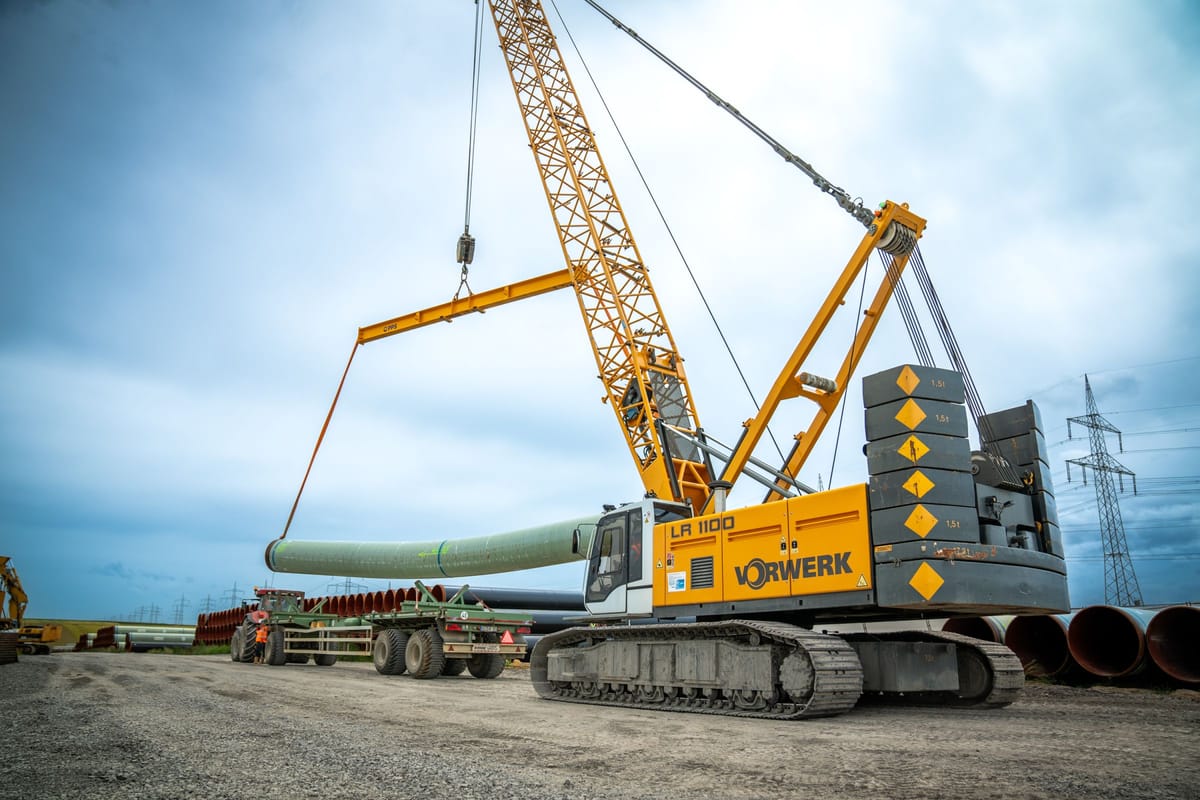
The publicly traded construction team behind Germany's energy transition
25 July 2026 (incorporates the half-year ad-hoc release of 22.07.2026

Awaiting confirmation - delivery on guidance (€180-200m EBITDA) and stable order intake (book-to-bill ≥ 1) are the milestones at which I re-test the thesis.
Executive Summary
At its core, Friedrich Vorwerk is a civil-engineering and plant-construction company - but one that happens to dig precisely where Europe has to sink hundreds of billions of euros into the ground over the next two decades. The company lays underground cables and pipelines, builds gas pressure-regulation stations, electrolysers and district-heating networks, and increasingly sells its own technology on top (welding robots, hydrogen-capable metering). Its customers are transmission system operators, municipal utilities, industry and energy suppliers - almost exclusively in Germany (2025: €697m of €704m in revenue).
Financially, the company is in excellent shape after the margin shock of 2023: revenue rose to €704m in 2025, EBITDA to €163m (23.2% margin), and in the first half of 2026 EBITDA jumped 70% to €93m - prompting the Management Board to raise full-year guidance to €180-200m. The balance sheet carries €212m of net cash, and return on capital employed (ROCE) exceeds 40% according to Berenberg.
The strength is demand: a de facto state-guaranteed, multi-year investment cycle (power grids, the hydrogen core network, the €500bn infrastructure fund). The risk is likewise political - a draft law that could once again give overhead lines priority over more expensive underground cables, plus the general dependence on permitting procedures and on a single country.
In one sentence: Friedrich Vorwerk is the listed construction crew of the German energy transition - highly profitable, debt-free, but kept on a short political leash.
1. What the company sells and who buys it
When I look at what Friedrich Vorwerk actually invoices, I see four product categories that all share the same core competence: getting something mission-critical safely into or onto the ground.
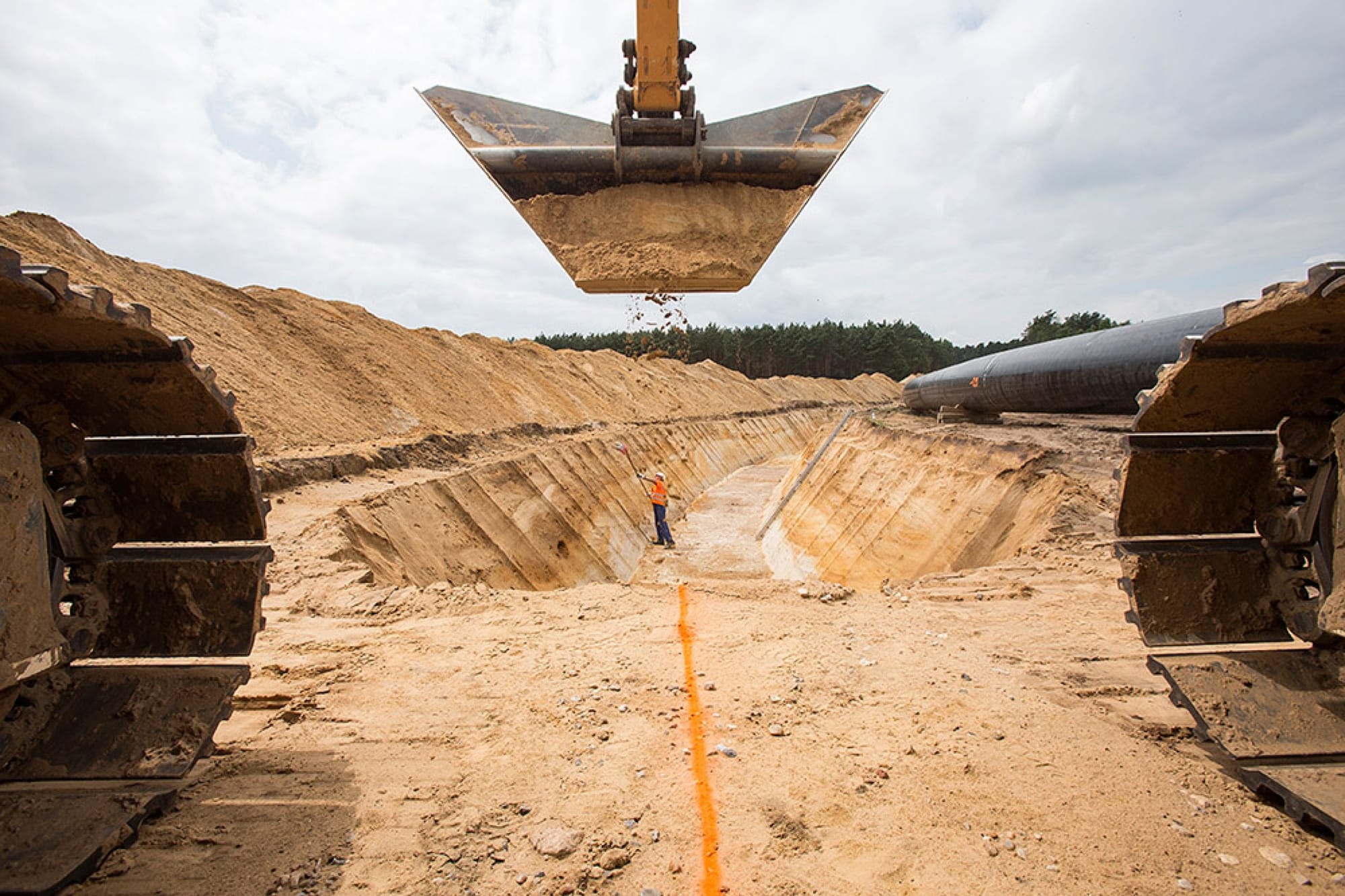
First, line construction - high-pressure natural-gas lines, high-voltage direct-current underground cables (HVDC), offshore onshore-connections and hydrogen pipelines. This is the highest-volume business and covers special civil engineering, trenchless HDD drilling and automated welding. Second, plant construction - gas pressure-regulation stations, compressor stations, turnkey electrolysers (e.g. the 10-MW PEM plant for Statkraft in Emden). Third, urban infrastructure - inner-city cable laying, road construction and, above all, district-heating networks (the "Adjacent Opportunities" segment). Fourth, and strategically the most exciting, proprietary technology and services - 5C-Tech's PX-II welding robots, the proprietary OrQa flow-metering technology, and cathodic corrosion protection.
The buyers are a small but well-funded customer base: transmission-line operators (terranets bw, EWE Netz, Gasunie), transmission system operators (Amprion for A-Nord, TenneT/TransnetBW for SuedLink), large industrial and energy groups (Statkraft), plus municipalities and municipal utilities. The common denominator: these customers buy not out of desire but out of regulatory necessity. They must move wind power south, they must build the hydrogen core network, they must decarbonise district heating - and for all of that they need a contractor that is certified, capacity-strong and reliable on deadlines. That very compulsion is Vorwerk's best salesperson.
2. How the company makes money
The revenue model is essentially project-based - large, multi-year works contracts, billed by construction progress (percentage-of-completion). A single order can range from a mid double-digit million figure (BorWin Kappa onshore connection, Bremen district heating €45m) up to the historical record of around €600m (FVG's share of A-Nord).
That means revenue is predominantly one-off and transactional per project, not subscription-like recurring. What distinguishes Vorwerk from a classic construction company, however, is the growing admixture of higher-margin, repeatable components: the sale of proprietary H2-ready parts, maintenance and corrosion-protection services and - the wildcard - the leasing/deployment of the 5C-Tech welding robots as a quasi-product. CFO Hameister sees up to €50m of annual revenue potential here at "significantly higher margins than in the legacy business".
The segment breakdown (Q1 2026) illustrates the shift in centre of gravity:
| Segment | Revenue share Q1 2026 | Role |
|---|---|---|
| Electricity | 56% | Growth engine (underground cable, HVDC, offshore) |
| Adjacent Opportunities | 16% | District heating, urban infrastructure |
| Natural Gas | (remainder) | Historical foundation, bridge technology |
| Clean Hydrogen | (small, growing) | Optionality, reference projects |
Notably, production output in H1 2026 was €448m (+35%), well above the reported revenue of €337m. The difference stems mainly from joint ventures (ARGEs), whose revenue share is not fully consolidated in the accounts. Anyone looking only at the revenue line underestimates actual operating activity - a point that also distorts the order-backlog figures (see point 3).
3. Quality of revenue
This is where it gets interesting, because revenue quality has two faces.
The good: The order backlog of €1,005m (or €1,446m including ARGEs) as of 30 June 2026 equals more than 1.4x annual revenue and provides multi-year revenue visibility - a luxury for a construction company. The book-to-bill ratio stood at 1.4 in Q1; values above 1 signal growing demand. Customers are creditworthy (network operators with regulated returns, the public sector), so default risk is low. And demand is structural, not cyclical: it hangs on climate targets and grid-expansion legislation, not on the business cycle.
The less good - and here I stay alert as an investor:
- Concentration risk. Almost all revenue arises in Germany (€697m/€704m in 2025). One country, one regulatory framework. In addition, a substantial share is concentrated in a few mega-projects (A-Nord alone ~€600m of FVG volume). If one of them is delayed, revenue shifts noticeably.
- One-off rather than recurring. Unlike a software or services company, Vorwerk must continually refill its order book. "Recurring revenue" is low.
- A quiet warning signal in the backlog. The order backlog as of 30.06.2026 fell slightly year-on-year (€1,005m vs. €1,105m; incl. ARGE €1,446m vs. €1,584m). Order intake in H1 did rise 46% (€321m vs. €220m), but the acquired total project volume including ARGE fell (€470m vs. €627m), because the prior year was distorted by large ARGE awards. No alarm, but a data point I track quarter by quarter.
Bottom line: revenue quality is above average for a construction stock - visible, state-underpinned, with first-class debtors - but it is project-heavy and highly concentrated both geographically and in regulatory terms.
4. Cost structure
The decisive figure up front: with an EBITDA margin of 23.2% (2025) - and at times almost 28% (H1 2026) - Vorwerk earns more than practically all competitors in grid expansion - ahead of cable makers like Prysmian (13%) or NKT (11%) and miles ahead of classic construction groups like Bilfinger (8%).
The cost drivers are typical of civil engineering: personnel (certified skilled workers, above all welders and civil-engineering specialists), materials (special steels, pipes, cables), subcontractors/external services and machinery and logistics costs. It was precisely these factors that revealed in 2023 how vulnerable the model can be: exploding steel and energy prices met fixed-price contracts, while at the same time expensive subcontractors had to be bought in for the hastily commissioned LNG pipelines - the EBITDA margin collapsed to 8.4%.
The lessons from that now define the cost structure:
- Price-escalation clauses in new contracts cushion material inflation.
- In-house capacity instead of external services - the workforce grew 15% in two years, so expensive third parties are "largely" avoided. This is the most important margin lever: own people work at higher margins than bought-in ones.
- Automation replaces the expensive, scarce factor of skilled labour (see point 7).
On scalability: a substantial part of the cost base is variable (project material, site labour), but the fixed-cost base of engineering, project management and the machine fleet creates a marked operating leverage. That was exactly what showed in H1 2026, when 11% revenue growth translated into 70% EBITDA growth. Management itself tempers the euphoria: the normalised margin potential is 21-22%. The current ~26-28% are therefore peak values, flattered by mild weather, flawless execution and successful renegotiations (claims). For my forecasts I assume a return toward 21-22%.
5. Capital intensity
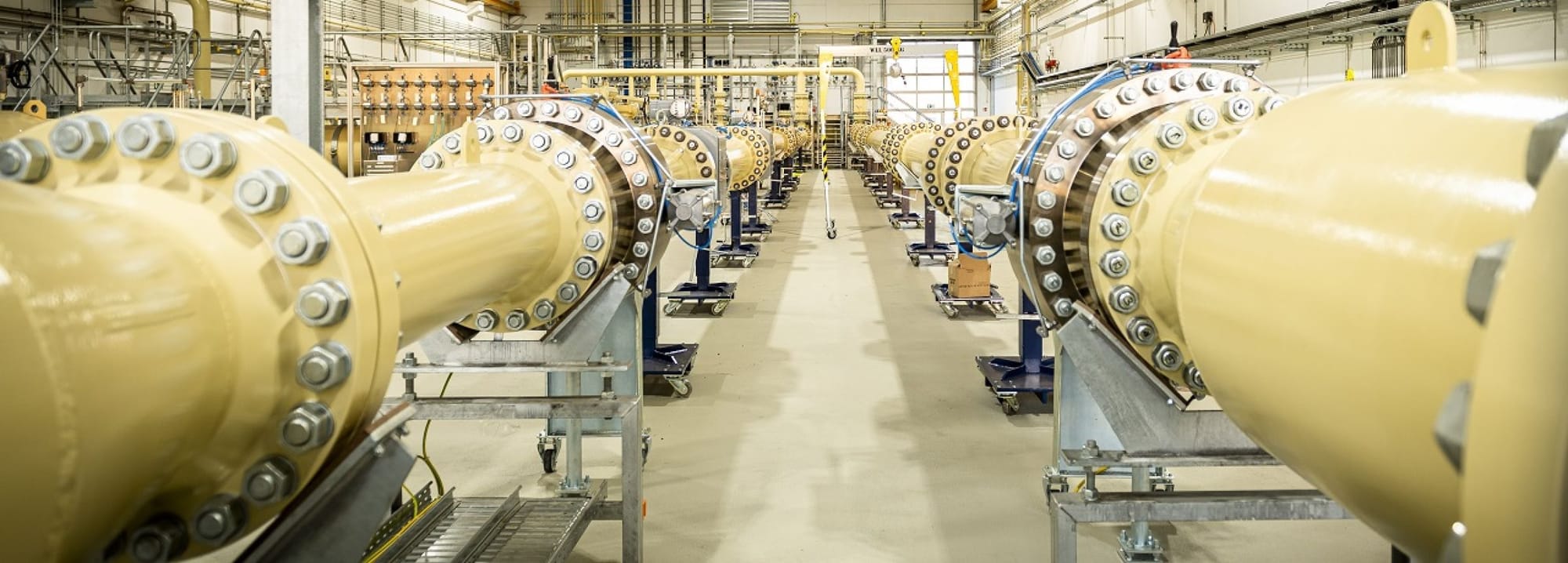
At first glance, civil engineering is capital-intensive - excavators, drilling rigs, welding equipment, vehicle fleet. Vorwerk operates thousands of machines and specialist devices. But the decisive question is not the absolute level of fixed assets, rather cash conversion - and that is remarkably good.
Net cash rose from €154m (end-2024) to €262m (end-2025) and stood at €212m as of 30.06.2026 - a jump of €128m versus €83.5m a year earlier. The company therefore finances its growth entirely from its own cash flow and accumulates liquidity despite record growth. The slight decline from €262m to €212m in the first half is seasonal working-capital build-up (sites ramp up over the summer) and not a warning sign.
Working-capital requirement is the sensitive point for any project builder: pre-financing material and personnel before milestones are billed, plus receivables management on claims. This is precisely where management tightened up after 2023. Viewed within the investment cycle, Vorwerk is in a comfortable phase: high utilisation, disciplined capex, no need for value-destroying capacity leaps, because growth comes via recruitment and automation rather than expensive large acquisitions. In short: capital-intensive in the installed base, but capital-efficient in growth - the ROCE of >40% is the best proof.
6. Growth drivers
I deliberately distinguish between structural (long-term) and cyclical (short-term) drivers, because that is decisive for the durability of the thesis.
Structural (the foundation for the next 10-20 years):
- Power-grid expansion. HVDC investment of ~€30bn (2020-2030) for corridors like A-Nord and SuedLink, plus offshore onshore-connections (BorWin, BalWin, LanWin). Electricity is already 56% of revenue.
- Hydrogen core network. 9,040 km, €18.9bn of approved investment volume through 2032. Reference project H2Coastlink 1 (Emden-Leer) has been won. ~60% brownfield repurposing additionally implies high-margin component replacement (point 7).
- German infrastructure fund (€500bn). A ten-year tailwind for grids, water and urban infrastructure - squarely in Vorwerk's addressable space.
- Water/wastewater renovation backlog (>€800bn over two decades according to VKU) - barely monetised so far, but a huge addressable market into which Vorwerk's available machines and crews fit directly.
- District-heating decarbonisation (Bremen €45m, Hamburg €70m).
Short-term / opportunistic:
- 5C-Tech export. Welding-robot orders in northern Iraq and Kazakhstan (Beineu-Bozoy-Shymkent) - higher-margin, container-scalable, up to €50m/year in potential. This is the first genuine international and technology lever.
- Price/mix. Rising order quality, because high investment volume meets few capable providers - Vorwerk can commit more selectively and at higher prices.
The levers are therefore primarily volume (grid expansion), mix (more technology/components) and price (provider scarcity) - predominantly structural. The cyclical part (international projects) is the smaller one, but the one with the greatest margin potential.
7. Competitive advantages
The central question: why does a civil-engineering contractor earn a 23% EBITDA margin where the industry sits at 8-10%? If it were merely chance, competition would compete it away. I see four mutually reinforcing moats:
- Technology / automation (the most important). The 5C-Tech welding robots (PX-II with the 5C-Connect ecosystem for remote monitoring and seamless documentation) reduce dependence on the industry's scarcest factor - certified welders. In a world of global skills shortages, "we need fewer people per kilometre of pipeline" is a structural cost advantage a regional competitor cannot replicate. On top come proprietary, patented products such as the OrQa flow meter (measures with almost no pressure loss and thereby lowers network operators' OPEX).
- Scale and capacity advantage. For billion-euro projects like A-Nord or SuedLink, only a handful of providers can muster the required crews, machines and certifications. This provider scarcity shifts pricing power toward Vorwerk.
- Turnkey integration. Through its acquisitions (Bohlen & Doyen, Puhlmann, VORWERK Stade, EEE/Gas Technology), the group covers the entire value chain - from drilling through welding to metering and control technology. The customer gets one hand, not ten subcontractors.
- References and trust. Decades-long relationships with the major network operators and a track record of flawless system projects are, in a business where a leaking high-pressure line is catastrophic, a real switching-cost protection.
How durable is that? The best evidence is financial: an EBITDA margin at the industry top and a ROCE of 51% (2025), likely >40% (2026/27). Such returns do not persist in competitive markets without a moat. My honest caveat: the automation lead is a few years, not decades, wide - competitors and robotics providers are catching up. The moat is deep, but I would not call it impregnable.
8. Industry structure and market position
The grid-expansion value chain runs from the component manufacturer (cables: Prysmian, Nexans, NKT; connectors: Pfisterer) through the EPC/construction service provider (this is where Vorwerk sits, alongside SPIE, Bilfinger, Porr) to the network operator/owner (Amprion, TenneT, TransnetBW, EWE), who collects the regulated return.
Profit traditionally concentrates at the ends - at the cable makers with a technology lead and at the regulated network operators. The construction/services middle is generally seen as low-margin and fragmented. Vorwerk's real achievement is that it has worked its way out of this low-margin middle - through technology and turnkey integration it earns more than the component manufacturers who actually sit higher up the chain.
The civil-engineering market is highly fragmented regionally (many small construction firms), but the segment of mission-critical mega-projects is consolidated - only a few play there. In Germany, Vorwerk is one of the leading providers of energy infrastructure, with around 2,100 employees at 14 main sites. There it acts neither as a pure price-taker nor as a dominant price-setter, but as a niche oligopolist with pricing power at the top end - it can be selective when supply is scarce, but ultimately depends on the regulatory investment budget for awards. Regulation is thus simultaneously the biggest driver and the biggest bottleneck (point 11).
9. Unit economics and performance indicators
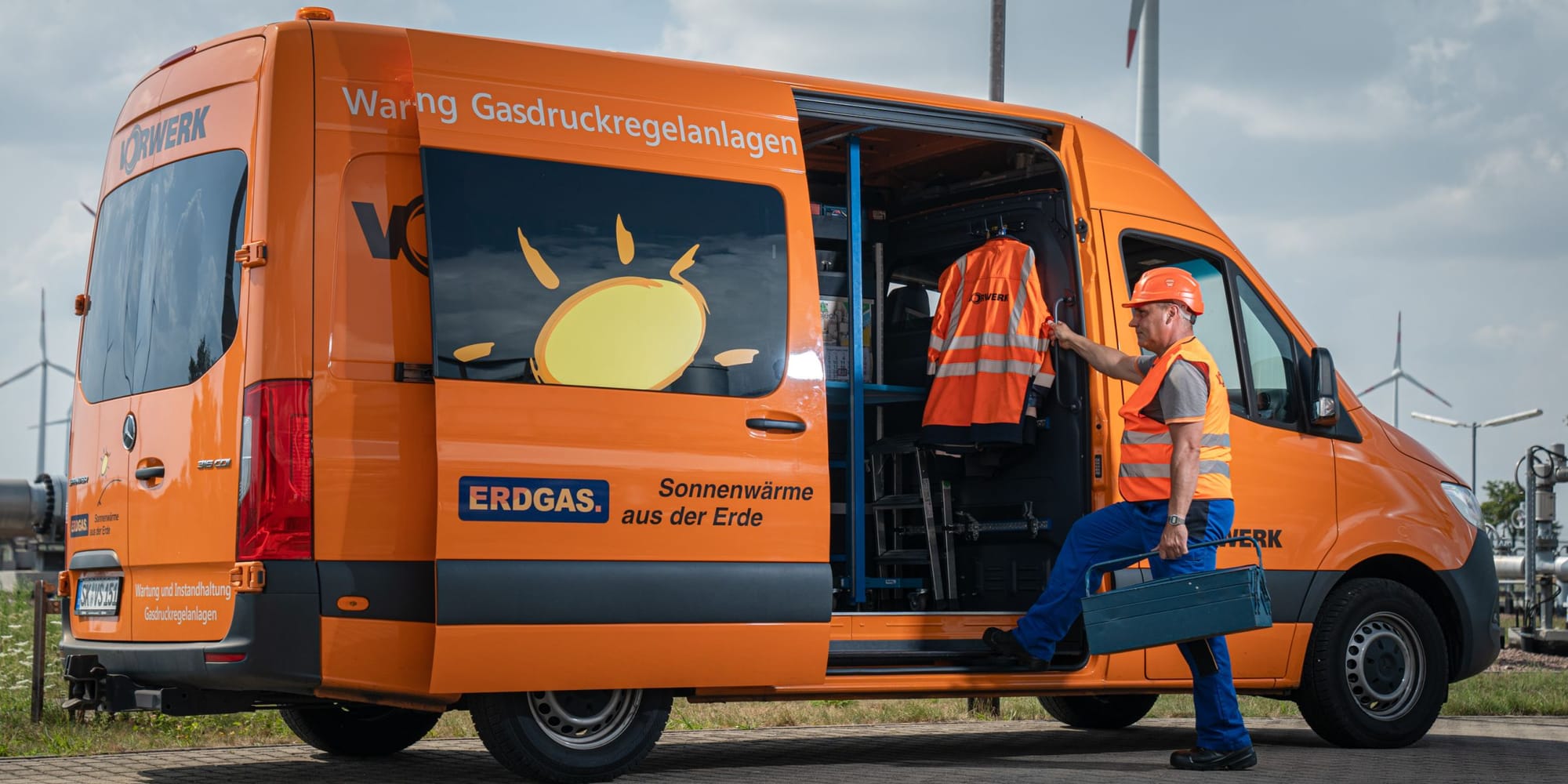
A pure project business has no clean "per-customer" cohorts like a subscription model. The relevant units here are the project and the productive worker. The most meaningful KPIs:
| Metric | Value | Interpretation |
|---|---|---|
| EBITDA margin (2025 / H1 2026) | 23.2% / 27.5% | Industry-leading; normalised 21-22% |
| ROCE (2024 / 2025 / 2026-27e) | 24% / 51% / >40% | Excellent return on capital (Berenberg) |
| Book-to-bill (Q1 2026) | 1.4 | Demand > execution |
| Order backlog / revenue | ~1.4x (or ~2.1x incl. ARGE) | Multi-year visibility |
| Net cash (30.06.2026) | €212m | Debt-free, self-financing growth |
| Employee growth (H1 2026) | +7% | In-house capacity instead of external services |
The decisive unit-economics insight: value per employee is rising, because automation (welding robots) and mix (more technology/components) lift revenue and margin per head. The proof is the "margin expansion paradox" - in construction, margins normally fall during strong growth (expensive subcontractors); at Vorwerk they rose, because more productive in-house staff and robots replaced external services. The KPIs are therefore improving, but are probably near their cyclical peak - my expectation is stabilisation at a high level, not further increases to an even higher one.
10. Capital allocation and balance sheet
The balance sheet is the trump card: debt-free, with €212m of net cash (11% of market capitalisation). There is virtually no maturity profile, no material off-balance-sheet obligations beyond the usual project guarantees. For a cyclical construction stock, this is an exceptionally robust foundation - it comfortably survives another "2023 moment".
Historical capital allocation:
- Organic growth / recruitment - the clear priority and the most valuable use of cash flow.
- Disciplined M&A - small, integration-friendly acquisitions (Bohlen & Doyen 2019, Puhlmann 2021, KORUPP, EEE, VORWERK Stade 2025). Deliberately to close competence and regional gaps, not to maximise revenue. This is what made the A-Nord award possible in the first place - value-creating.
- Dividend - for 2025, €1.10 per share (€0.70 base + €0.40 special dividend), a yield of around 1.6% at a ~€70 share price. The special dividend signals that excess liquidity flows back to shareholders rather than into expensive diversification.
Ownership structure - my most important governance data point: MBB SE (Executive Chairman and FVG Supervisory Board chair Dr. Christof Nesemeier) holds around 44% (after a partial sell-down from ~50.5% at end-2024 to 44.3% in 2025); CEO Torben Kleinfeldt holds a good 18%. Together, insiders control the majority. This isolates management from short-term capital-market pressure and orients it toward long-term value creation - with the usual minority-shareholder caveat that one has to trust the anchor shareholders.
And then there is the signal that makes me, as an investor, prick up my ears: After the share-price crash since autumn 2025, insiders bought heavily in spring 2026 - CEO Kleinfeldt for €2m (at ~€68 and ~€58), CFO Hameister for €219,000, and MBB Capital for €1.4m (including €747,000 on 28 May at ~€67). When the people with the best information add their own money at a halved price, that is the most honest buy signal there is. Overall, I judge capital allocation to be value-creating and shareholder-friendly.
11. Risks and points of failure
I rank the risks by their real explosive power for the thesis.
1. Regulation / the "underground-cable priority" risk (the most relevant). A draft law debated in the Bundestag (first reading 11 June 2026) could once again give priority to the cheaper overhead lines over underground cables. Since Vorwerk generates ~30% of its revenue in the underground-line business and has so far not been mandated to build high-voltage overhead lines, this was precisely the trigger for the share-price halving since autumn 2025. CFO Hameister qualifies this on three counts: no short- or medium-term impact (only long-term), "the entire power-cable market does not collapse", and resources are "fungible" - the same excavators also lay hydrogen, gas, CO₂ and water lines. Network operators too (Transnet-BW head Götz) do not believe in a comeback of the pylons, especially as the legal text has already been "significantly softened" relative to the ministerial draft. I classify this as a real but overrated risk - it hits a third of revenue in the long run, not the whole business, and the capacity is redeployable.
2. Permitting and execution delays. Plan-approval procedures and citizens' lawsuits have already pushed A-Nord from end-2026 to summer 2027. This cancels no revenue (the order is contractually secured) but shifts it in time - with corresponding quarterly volatility and disappointment potential in estimates (see the slight Q1 2026 miss).
3. Concentration risks. One country (Germany), one regulatory framework, few mega-projects, a politically driven investment cycle. A shift in political priorities or budget cuts would hit Vorwerk almost unbuffered.
4. Cycle and margin mean-reversion. The current ~26-28% margin are peak values. If the margin falls back to the normalised 21-22% (or below under stress), profit shrinks even without a revenue decline - a valuation risk if the market extrapolates the peak margin.
5. Skilled labour and execution. The whole model hangs on the ability to find qualified staff and execute projects flawlessly. So far both are succeeding (workforce +15% in two years, aided by headcount cuts in other industries).
6. Technology risk / AI disruption. Honest assessment: the core business - moving earth, welding pipes, laying cables - is physical and therefore largely immune to pure software/AI disruption. You cannot move a pipeline to the cloud. Within the company, AI is more tailwind than threat: the 5C-Tech robots use sensors, algorithms and computing power for real-time process control; OrQa and the predictive-maintenance platform (Bluugo) digitalise operations and the fleet. The greatest technology risk is, paradoxically, that a competitor adopts automation faster and levels Vorwerk's efficiency lead. Vorwerk counters this by turning automation itself into a saleable product (5C-Tech export).
How the equity story would fail - in plain words: The underground-cable priority becomes law and is enforced hard, the Electricity segment (56% of revenue) shrinks, the hydrogen ramp-up is delayed, order intake turns durably below 1, the peak margin normalises, and the market values Vorwerk again like an ordinary construction stock. The areas of highest uncertainty are the exact legal text, the timing of the hydrogen core network, and the sustainability of the peak margin.
12. Valuation and expected return profile
Starting position (as of 25.07.2026): ~20.0m shares, share price around €70 (recently volatile between ~€66 and ~€75; the stock jumped double-digits on 22 July on the raised guidance). This implies around €1.4bn market capitalisation, less €212m of net cash, for an enterprise value of ~€1.19bn.
Measured against the 2026 guidance (revenue ~€755m, EBITDA ~€190m midpoint), that means:
| Multiple | FVG (2026e) | History / peers |
|---|---|---|
| EV/EBITDA | ~6.3x | Peers 6-17x; FVG traded well above since IPO |
| EV/Sales | ~1.6x | Peers 0.2-3.1x |
| P/E | ~13-14x | Avg. since IPO 2021: ~20x |
| Dividend yield | ~1.6% | - |
The core observation: after the share-price halving, Vorwerk is valued more cheaply than most grid-expansion beneficiaries - and that with the group's highest margin and structural growth. For comparison, the peer table (Bloomberg/The Market, 16.06.2026, 2026/27 estimates):
| Company | EV/EBITDA | P/E | EV/Sales | EBITDA margin 2025 |
|---|---|---|---|---|
| Friedrich Vorwerk | 6.0 | 13 | 1.4 | ~23% |
| Bilfinger | 6.4 | 13 | 0.5 | 8% |
| SPIE | 8.5 | 15 | 0.9 | 10% |
| Nexans | 8.2 | 19 | 1.0 | 8% |
| NKT | 13.9 | 29 | 1.8 | 11% |
| Prysmian | 16.0 | 28 | 2.1 | 13% |
| Pfisterer | 15.9 | 25 | 3.1 | 17% |
A P/E of 13 for a debt-free company with >40% ROCE, a 20%+ margin and a multi-year, state-underpinned order book is at first sight a mismatch - the market is evidently pricing in the underground-cable risk and margin normalisation.
Scenario framework (horizon ~3 years, rough assumptions):
| Scenario | Key assumptions | EBITDA (exit) | Multiple | Impl. value/share | vs. ~€70 |
|---|---|---|---|---|---|
| Bear | Underground-cable priority bites, Electricity shrinks, order intake <1, margin falls to ~16-17% | ~€125m | 5.0x | ~€44 | -37% |
| Base | Structural build-out intact, revenue ~€900m by 2028, margin normalises to 21-22% | ~€190m | 7.0x | ~€83 | +18% |
| Bull | H2 core network + 5C-Tech export + infrastructure fund fire, revenue ~€1.1bn, margin ~23%, re-rating | ~€250m | 8.5x | ~€125 | +80% |
(All values include growing net cash, excluding cumulative dividends of roughly €3-4 over the period. Multiples deliberately set conservatively below today's cable peers.)
This range broadly matches what the market signals via analysts: mwb (€60) and Jefferies (€65) at the sceptical end, Berenberg (€110 Buy) at the optimistic - a rarely wide corridor that honestly reflects the political uncertainty.
What has to happen for the price to be attractive / fair / expensive?
- Attractive (today's level): It is enough for the underground-cable law to stay as "softened" as feared and for Vorwerk to serve only the structural base demand - then the base scenario is the anchor and the stock offers a favourable risk/reward profile.
- Fair: The current P/E of ~13 implicitly assumes a marked margin and growth normalisation. Anyone who expects exactly that sees the stock as fairly valued.
- Expensive: Only if the bear scenario materialises (hard underground-cable priority plus a margin collapse) - then even the low multiple would still be too high.
13. Catalysts and time horizon
Short-term (0-12 months):
- Clarification of the grid-expansion law - by far the most important price driver. A shareholder-friendly, diluted legal text would defuse the dominant overhang.
- Q3/Q4 2026 figures and delivery on the raised guidance (€180-200m EBITDA). The full H1 report is published on 13.08.2026.
- Order intake - every new mega- or hydrogen order (after H2Coastlink 1) validates the thesis and lifts the backlog.
- Continued insider buying as a confirming signal.
Medium-term (1-3 years):
- 5C-Tech scaling - further international orders; proof that the higher-margin technology story (up to €50m/year) holds.
- Award of further hydrogen core-network sections - H2Coastlink 1 as a door-opener.
- Ramp-up of the €500bn infrastructure fund into concrete tenders.
Slow-acting levers (3+ years):
- Product-mix shift toward proprietary H2-ready components (OrQa, heat exchangers) in the course of brownfield repurposing - higher margin, less cyclicality.
- Operating leverage with continued volume growth.
- CO₂ and water infrastructure as additional, so-far barely-priced end markets.
Expected time horizon of the thesis: The market will recognise the value above all when (a) the regulatory uncertainty falls and (b) several quarters show the peak margin is not a one-off. I reckon on a confirmation horizon of 12-36 months - short enough that the wait is paid for by growth and dividends, long enough that patience is required.
Sources
- friedrich-vorwerk-group.de/Investor Relations
- Investing.com
- EQS-News
- Mark Böschen, "Infrastructure winner Friedrich Vorwerk: The insiders are using the price slump", The Market / NZZ, 16.06.2026
Disclaimer: This analysis is for informational purposes and is not investment advice. I am not a financial adviser; the valuation scenarios rest on rough, disclosed assumptions and may deviate substantially from actual developments. Any investment decision requires your own due diligence.