
Cicor Technologies
Cicor is a well positioned, disciplined consolidator in structurally growing, regulated niches with real moats and a healthy balance sheet. It is not a deep-value bargain but a quality bet on execution.
Ejector seats, pacemakers, and satellites — the quiet rising star of European specialty electronics
A first, smaller position can be justified today as i like asymmetric upside profile and the favourable tailwind in the Aerospace & Defence sector. Upcoming milestones: the report for the second half of 2026 (is the jump in margins actually real?), will Éolane achieve the typical group margin, and further confirmation would be a stable book-to-bill ratio above 1.
Every milestone met lowers the execution risk and justifies topping up. I'll use pullbacks as opportunities: should a weak industrial or currency quarter push the stock toward CHF 100–110 (near the IFBC fair-value lower bound) without breaking the margin thesis, that would be an attractive add point.
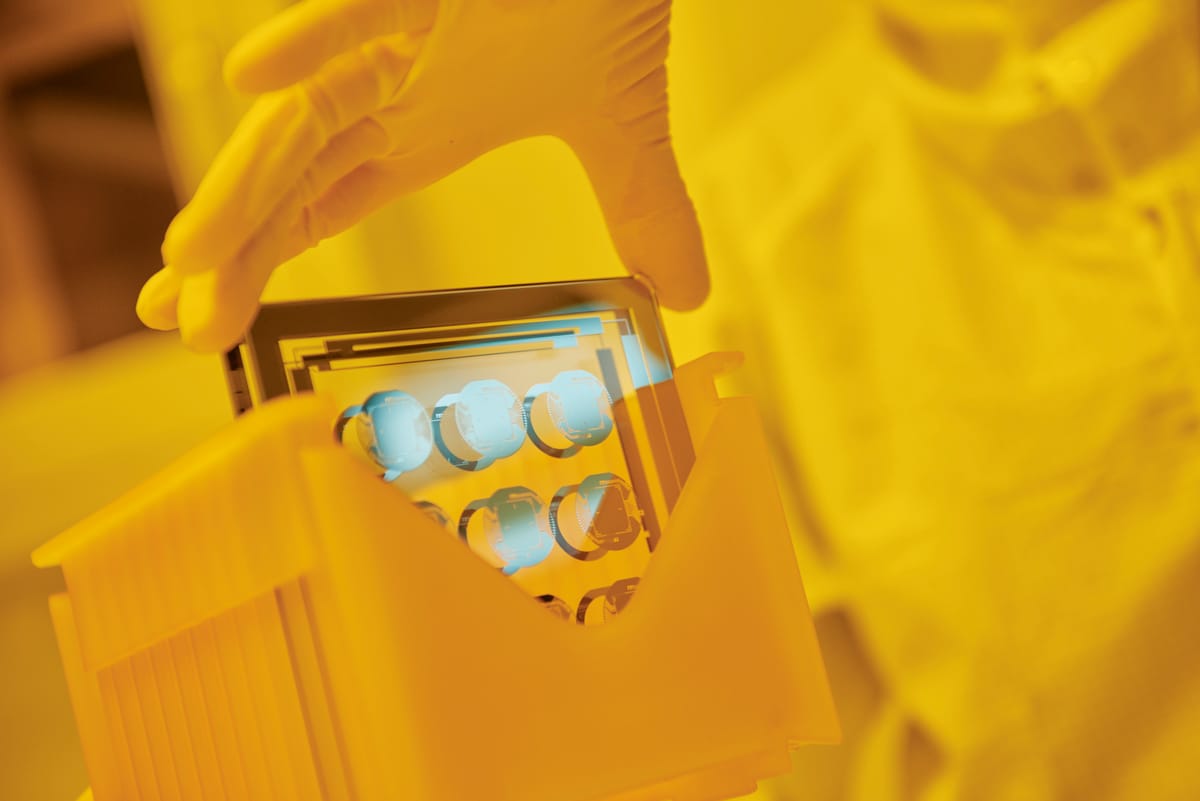
Cicor is a Swiss contract manufacturer of highly complex electronics (Electronic Manufacturing Services, EMS). One that deliberately stays out of the price war of mass production. Instead of soldering phones or car radios by the million, Cicor builds the electronics for ejection seats, pacemakers, hearing aids, satellites and rail signalling systems: small volumes, high complexity, regulated markets with thick entry barriers. Money is made on engineering and long-running manufacturing contracts, not on material throughput.
Since 2021, backed by its private-equity anchor One Equity Partners, the company has pursued an aggressive "buy-and-build" strategy: five acquisitions in 2025 alone, a revenue jump to CHF 616.5m (2025) and CHF 334.1m in H1 2026 (+19%). The price of that is a temporarily diluted margin (adjusted EBITDA of 8.4% in H1 versus a historical >10%), because low-margin turnaround cases such as Éolane still need integrating. The counter-move is already under way: a return to organic growth (+5.3% in Q2), record order intake (book-to-bill of 1.2) and a profitability programme with a >CHF 10m annual EBITDA lever.
For an investor in one line: Cicor is a disciplined consolidator of regulated niche electronics whose stock is, at its core, a bet that concentrated revenue will now translate into concentrated margin.
1. What the company sells and who buys it
Cicor sells electronic complexity as a service. The offering spans the entire product life cycle — from hardware and software development through miniaturisation and manufacturing to after-sales service. Concretely, this splits into two technology strands:
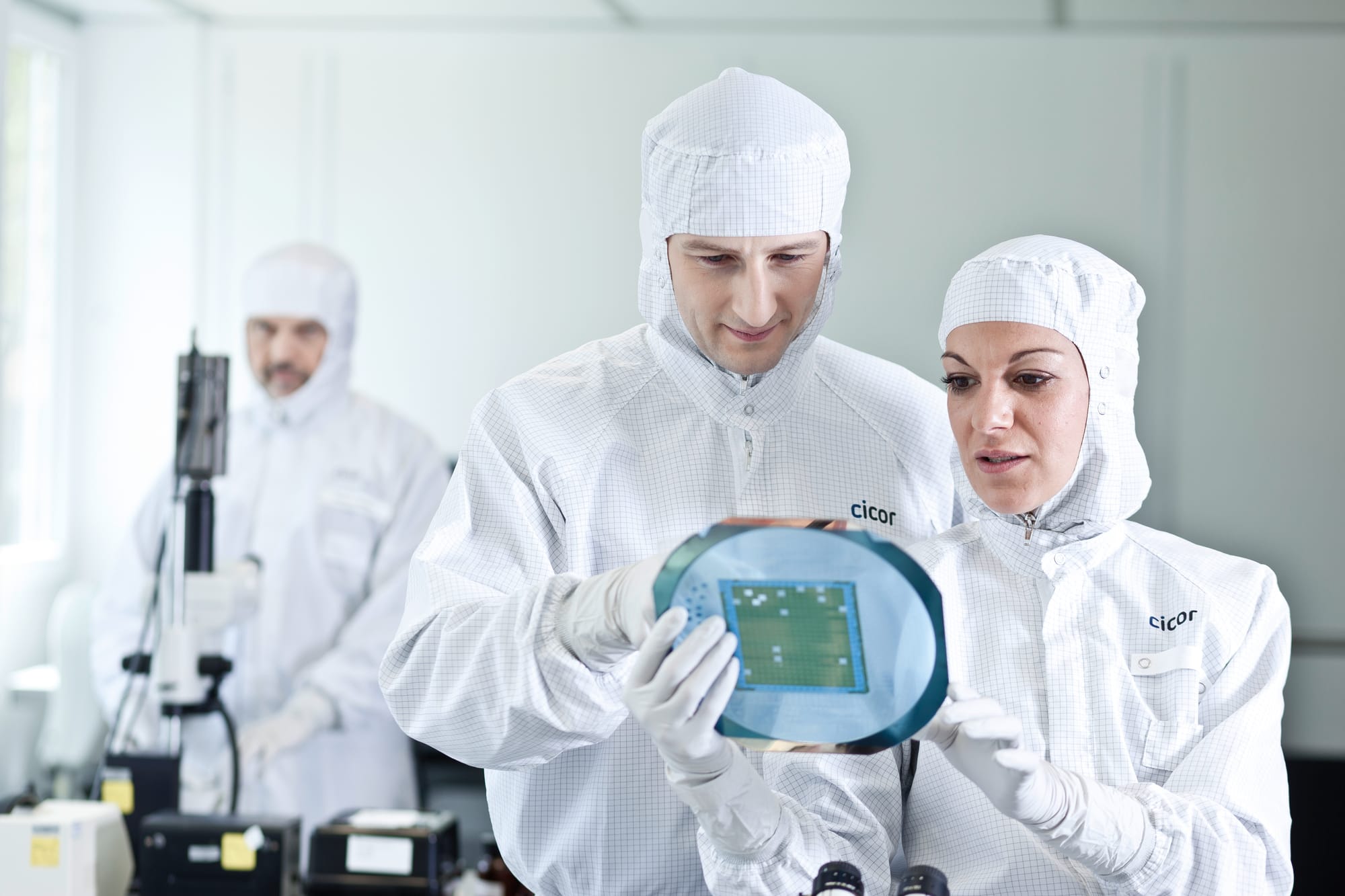
- Advanced Substrates (AS): rigid, rigid-flex and flexible printed circuit boards (polyimide films down to 12.5 µm for 3D miniaturisation), plus thin- and thick-film technology on ceramic/glass substrates (structural resolution down to 80 µm), produced under clean-room conditions.
- Electronic Manufacturing Services (EMS): microelectronics assembly, chip-on-board, wire bonding, Ag sintering, placement of tiny 01005 chips, housing construction and precision injection moulding (Precision Plastics) — also ISO-certified and partly clean-room.
Who buys — and why: The target customers are original equipment manufacturers (OEMs) in three regulated end markets, whose revenue shares in H1 2026 looked like this:
| End market | Revenue share H1 2026 | Who buys and why |
|---|---|---|
| Industrial | ~40% | Automation, semiconductor equipment, measurement technology, IoT, rail infrastructure — need robust high-end electronics and supply security in Europe |
| Aerospace & Defence | ~28% | Defence "primes" and aerospace — buy certification (EN 9100, JOSCAR), traceability and reliability, not the lowest price |
| Healthcare | ~18% | MedTech manufacturers (implants, hearing aids, drug delivery) — need ISO 13485 clean rooms, biocompatibility and MDR compliance |
The common denominator across all customers: they have a problem where a manufacturing defect is not "annoying" but life-threatening or mission-critical. That is exactly where trust dominates over price — and exactly where Cicor wants to be.
2. How the company makes money
The revenue model is a hybrid with a high degree of recurrence. Cicor typically wins customers during the development phase (NPI, New Product Introduction) and then grows into serial production. Once "designed into" a certified product, Cicor remains the supplier over the entire — often decades-long — life cycle of a defence or medical product, because switching would trigger requalification and recertification.
Revenues are therefore predominantly transaction/order-based, but with a long tail: orders in A&D have lead times of 6–12 months before they translate into revenue. There are no SaaS-style subscriptions, but the combination of design-win lock-in, long product life cycles and framework contracts creates a de facto recurring revenue base. A vivid example: Cicor France's new rail-infrastructure contract, expected to deliver >CHF 20m per year in recurring revenue over the long term.
Segmentation of revenue occurs both by end market (Industrial/A&D/Healthcare, see above) and by technology division (AS vs. EMS). Pricing is value-based: in regulated niches with few capable providers, complexity can be priced in — unlike in consumer EMS, where price is the only argument.
3. Quality of revenues
Revenue quality is structurally good, but genuinely cyclical. Five points:
- Diversification: Three end markets, >20 sites, hundreds of customers. Roughly three quarters of the leading European defence primes are already customers — a broad but high-quality base. No dangerous single-customer concentration is apparent.
- Recurrence character: high, but not contractually guaranteed. The design-win lock-in in A&D and Healthcare is the real quality driver — revenues "stick" across product life cycles.
- Visibility: The book-to-bill of 1.2 (fifth consecutive quarter above 1.0) and order intake up 39.8% to CHF 399.8m give unusually good visibility into 2027.
- Cyclicality: The industrial part (40%) is cyclically sensitive — the organic decline of −6.0% in Q1 2026 (supply-chain bottlenecks, component shortages) shows Cicor is not a recession-proof stock. A&D, by contrast, is counter-cyclical/state-driven.
- Trend: The turning point from −6.0% (Q1) to +5.3% (Q2) organic suggests the dip was procurement-driven rather than demand-driven.
In short: the revenue base is more "fine wine with vintage variation" than "stable subscription cash flow".
4. Cost structure
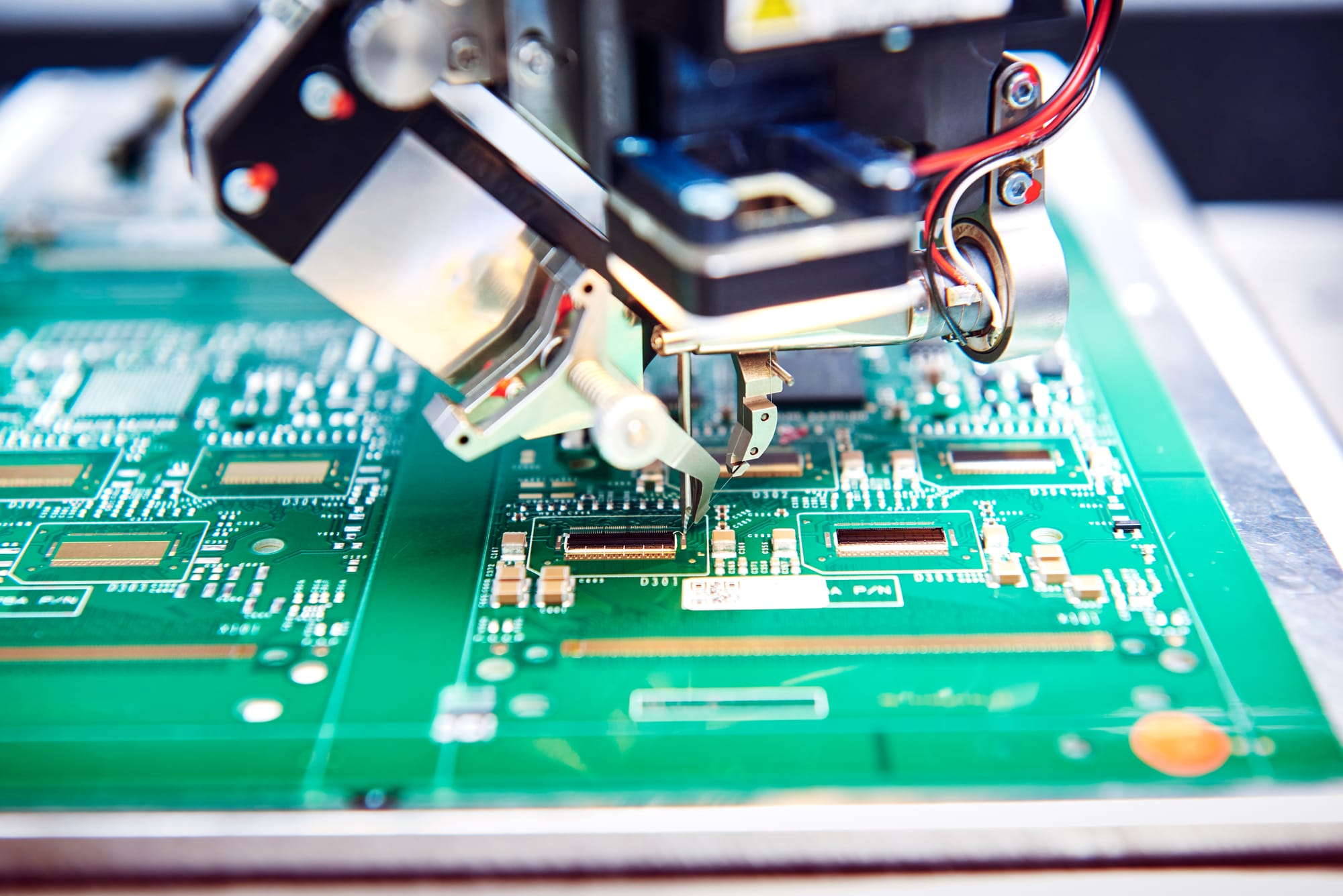
As a manufacturer, Cicor is material-intensive: by far the largest cost block is material costs (electronic components, substrates), followed by personnel costs (>3,300 employees) and the fixed costs of clean-room and manufacturing infrastructure. Logistics and marketing costs are secondary by comparison.
Margin picture (H1 2026):
| Metric | H1 2026 | H1 2025 | Comment |
|---|---|---|---|
| Adjusted EBITDA | 28.0m / 8.4% | 29.0m / 10.3% | dilution from Éolane integration |
| Reported EBITDA | 24.7m / 7.4% | — / 9.4% | incl. CHF 3.3m one-off costs |
| Adjusted EBIT | 19.1m / 5.7% | — / ~6.7% | |
| FY2025 adj. EBITDA (reference) | 65m / 10.5% | — | historical target level |
The key message: the margin is not broken, it is diluted. Éolane was acquired out of a restructuring situation and initially ran well below the group average. The business model itself is capable of >10% EBITDA — the FY2025 level of 10.5% shows that, before the weakest H1 2026 acquisitions fully hit.
Scalability: The fixed-cost share (clean rooms, certifications, engineering) is high, which means operating leverage — as utilisation rises, the margin jumps disproportionately. That is precisely the logic behind the margin jump expected for H2 2026 (EBITDA expectation of CHF 42–52m in H2 versus 28m in H1).
5. Capital intensity
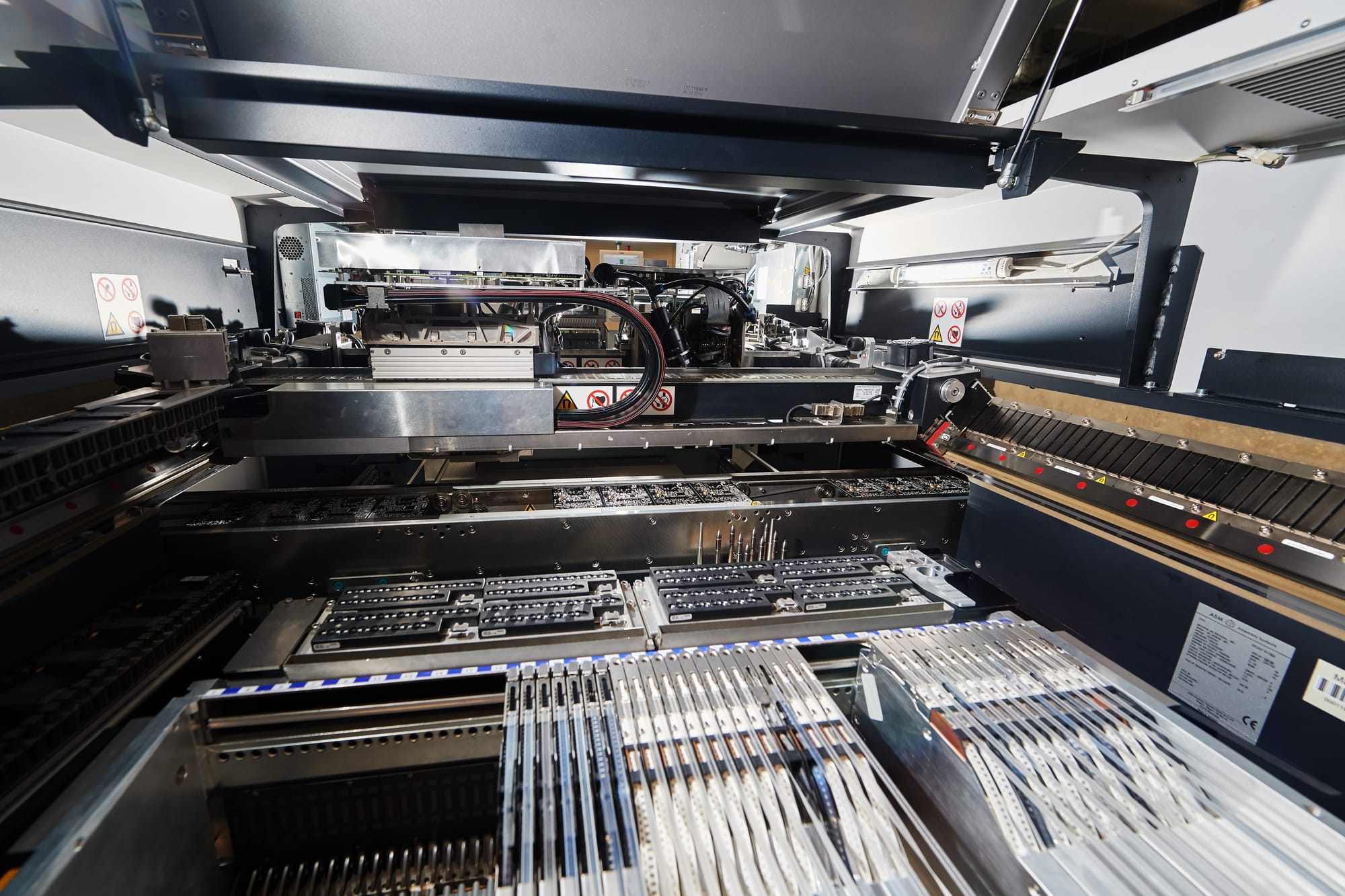
EMS is more capital-intensive than pure software, but lighter than, say, chip fabrication. Cicor needs clean rooms, placement machines, test and inspection equipment, and certifications. Notable, however, is the stated target of CAPEX below 3% of revenue (Cicor 2028 framework) — disciplined for a manufacturer and indicative of a more "asset-light" high-mix/low-volume model.
The real capital consumer at present is not fixed assets but working capital. Free cash flow before acquisitions swung from +9.4m (H1 2025) to −CHF 11.5m (H1 2026). The cause is deliberate working-capital build-up:
- higher receivables from strong quarter-end revenues;
- targeted inventory build-up to secure the expected production ramp-up in H2 (record order book) with materials.
Operating net working capital / revenue rose from 22.3% (end 2025) to 24.3% (mid-2026). This is temporary and not an alarm signal — in H1 2022 the ratio still stood at a critical 34.2%, so the structural trend is clearly positive. For context: in FY2025 Cicor reported an exceptional FCF of CHF 49m. The negative H1 figure is an investment in future revenue, not a leak.
Where in the investment cycle? Cicor stands at the transition from the "buy" phase (capital flowed into acquisitions) into the "build/harvest" phase (capital flows into integration and utilisation). Cash conversion should normalise with the H2 ramp-up.
6. Growth drivers
| Driver | Type | Comment |
|---|---|---|
| A&D demand (Europe rearmament) | structural, long-term | Sector revenue +55% to ~CHF 94m in H1; 45% CAGR since 2023. The most important engine. |
| Nearshoring / technology sovereignty | structural | OEMs relocate critical manufacturing to Europe/North Africa — Cicor's hubs (Morocco, Romania) fit this exactly. |
| European regulation (CSRD, MDR, Battery Regulation) | structural | Certified, ESG-transparent manufacturing becomes a hard award criterion. |
| M&A / consolidation | partly structural | The fragmented EMS market (1,700–2,350 firms) invites acquisition — Cicor is a consolidator. |
| Healthcare recovery & drug delivery | structural | MedTech demand recovery + CDMO positioning in smart drug delivery. |
| Resolution of supply-chain/component bottlenecks | cyclical, short-term | Drove the Q2 turnaround — but a one-off catch-up effect. |
The good news for the thesis: the dominant drivers (A&D rearmament, nearshoring, regulation) are structural and multi-year, not mere cyclical waves. The tailwind from Europe's defence-spending wave should carry Cicor for years.
7. Competitive advantages
Cicor's moat is not a single ditch but a certification-and-switching-cost maze:
- Regulatory certifications as an entry barrier: EN 9100 and JOSCAR (A&D), ISO 13485 and MDR (Healthcare), ISO class 5–8 clean rooms. Building these takes years and money — low-cost competition simply cannot get in here.
- Switching costs / design-win lock-in: Once Cicor is "designed into" a certified implant or defence programme, a supplier switch is expensive and risky for the customer (recertification). That explains the sticky revenues.
- Technological niche dominance: electronics in ~80% of all ejection seats of the "free world"; Cicor technology in every second hearing aid worldwide. These are evidence of deep, barely copyable specialisation.
- Customer relationships as a network: ~75% of European defence primes as customers — a reference base that attracts new orders.
How durable and demonstrable? The evidence lies less in the current (diluted) margin than in the FY2025 level of 10.5% EBITDA and the ROIC target of >15%. If the profitability programme works, margins and return on capital should quantitatively confirm the moat. As long as the margin is depressed by integration, one must partly trust the moat — this is one of the open flanks of the thesis (see Point 11).
8. Industry structure and market position
The European EMS market (EMEA ~EUR 57bn, ~76–80bn incl. Asian imports) is growing at ~6.8% CAGR through 2030 and is highly concentrated with a simultaneously long tail: ~6% of companies generate >80% of revenue, while 1,700–2,350 firms fight over the rest.
Value chain & profit pools: The margin lies not in pure assembly (where price competition reigns) but in design, certification and the ability to master regulated complexity. That is exactly where Cicor positions itself — as a niche specialist with pricing latitude, not a price taker in the mass business.
Competitive environment:
- Tier-1 giants (Foxconn, Flex, Jabil): >EUR 14bn in Eastern Europe, but in consumer/automotive — not a direct competitor in Cicor's niches.
- European incumbents: Zollner (DE), GPV (DK, bought Enics), Asteelflash (USI), Scanfil (FI), Lacroix (FR), Hanza (SE).
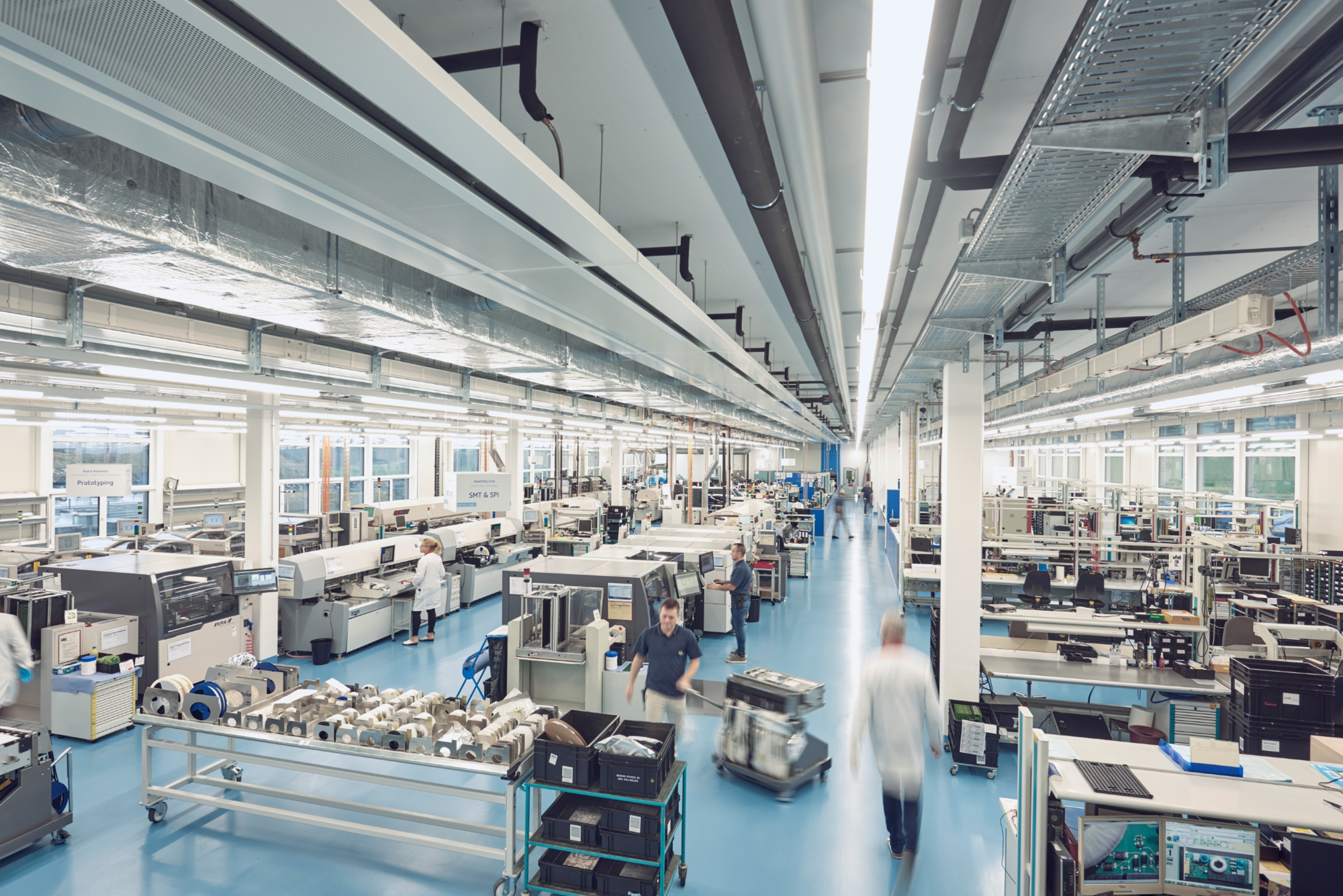
Cicor's rank: Number 6 of all EMS providers in Europe and number 4 among the listed European EMS companies. In the strategically most valuable segment — A&D — Cicor has worked its way up to second-largest European EMS provider, and in Healthcare to number 3. That is remarkable for a company that was still a regional niche player in 2021.
9. Unit economics and performance metrics
Classic SaaS metrics (CAC/LTV/churn) apply only partially to a manufacturing business. The relevant control variables are:
| KPI | Value | Trend |
|---|---|---|
| Book-to-bill | 1.2 (5th quarter >1.0) | strong, stably high |
| Order intake | CHF 399.8m (+39.8%) | record |
| Organic growth | Q1 −6.0% → Q2 +5.3% | turning point reached |
| Adjusted EBITDA margin | 8.4% (H1) vs. 10.5% (FY2025) | temporarily depressed, recovery expected |
| Working capital / revenue | 24.3% (from 34.2% in 2022) | structurally falling |
| ROIC (target) | >15% (Cicor 2028) | yet to be proven |
The decisive "cohort" for a Cicor investor is the Éolane cohort: the real value driver of the next 18 months is whether the low-margin France plants can be lifted to group level by the end of 2026. If that succeeds, aggregate unit economics improve visibly; if it fails, the margin stays stuck in the 8% range. The trend (Q2 turnaround, book-to-bill 1.2, profitability programme) currently points up.
10. Capital allocation and balance sheet
Historical allocation: The clear emphasis was on inorganic growth — with OEP backing, numerous companies were acquired 2021–2026 (five in 2025 alone). No dividend: the board continues to propose forgoing distributions and allocating capital to M&A and organic capacity expansion. For a growth consolidator, that is consistent.
The most important evidence of discipline — the collapsed TT Electronics deal: In October 2025 Cicor offered GBP 287m for TT Electronics (64% premium), financed via a GBP 195m senior term loan. When institutional resistance formed (including DBAY Advisors) and TT shareholders rejected it in January 2026, Cicor withdrew — rather than getting drawn into an irrational bidding war. This is exactly the behaviour one wants to see from a value-oriented capital allocator: willing to do transformational deals, but not at any price.
Balance-sheet strength: Net debt / EBITDA stood at 1.1x at the end of 2025 — very moderate and well below the self-imposed ceiling of 2.75x. That leaves ample firepower for further acquisitions without overstretching the balance sheet. Equity per share: CHF 34.32 (2025).
Value created or destroyed? The verdict is largely positive but not yet complete. Pro: revenue has multiplied, the market position is qualitatively strong, the balance sheet stayed healthy, the TT withdrawal shows discipline. Con/open: the ROIC proof (>15%) is still outstanding, and the true test — margin-enhancing integration — is only just running. The stock itself has long acknowledged the value creation: from ~CHF 43 (end 2022) to ~CHF 127 (end 2025) and ~CHF 130 today.
11. Risks and points of failure
How the equity story could fail — in simple terms: Cicor buys a lot of revenue but never gets the margin up. Concretely:
- Integration risk (the central risk): If Éolane & co. are not lifted to >10% margin, Cicor remains a revenue-large but margin-weak manufacturer — and the valuation (see Point 12) would be too high. The entire bull case hangs on margin execution.
- Cyclical/cycle risk: The industrial part (40%) reacts to demand and component cycles, as the Q1 slump showed.
- Currency risk: As a CHF reporter with revenues in EUR/GBP/USD, Cicor suffers from CHF strength — in H1, currency effects cost 3.8 percentage points of growth (CHF 10.8m). A structural headwind.
- M&A / leverage risk: The buy-and-build strategy lives off the next deal. An overpriced acquisition or a failed integration could destroy capital (the TT withdrawal shows, however, that management is aware of this).
- Capital-market / anchor-shareholder risk: OEP holds ~40%. A later exit (PE investors don't stay forever) could create supply pressure on the stock — even though OEP explicitly does not intend a delisting/squeeze-out.
Technological risk, specifically AI disruption: Here Cicor is comparatively well protected. AI primarily disrupts software and information products — not the physical, certified manufacturing of ejection-seat or implant electronics. On the contrary: AI infrastructure (servers, semiconductor equipment, edge devices) tends to drive demand for exactly the high-end electronics Cicor builds. The bigger "tech risk" is more classic: that a new manufacturing technology (e.g. advanced packaging) devalues Cicor's substrate know-how — a slow, observable risk, not an acute AI shock.
Where uncertainty is greatest: in the exact margin development of the acquired units and the sustainability of the organic Q2 rebound. The H1 data is an interim status, not final proof.
12. Valuation and expected return profile
Starting point (price anchor ~CHF 130, ~4.4m shares incl. converted MCN):
| Metric | Value | Classification |
|---|---|---|
| Market capitalisation | ~CHF 572m | |
| + Net debt (~1.1x·65) | ~CHF 72m | |
| = Enterprise value | ~CHF 644m | |
| EV/EBITDA 2025 (65m) | ~9.9x | trailing |
| EV/EBITDA 2026e (75m, mid-guidance) | ~8.6x | you're buying the H2 jump |
| EV/revenue 2026e (725m) | ~0.89x | typically low for manufacturing |
| P/E reported 2025 (EPS 3.85) | ~34x | distorted by one-off costs |
| P/E adjusted 2025 (EPS 7.45) | ~17x | the more meaningful figure |
Comparison to its own history: The stock has risen from ~CHF 43 (end 2022) to ~CHF 130 — a re-rating reflecting the transformation from niche player to pan-European consolidator. The IFBC fairness opinion (early 2025, DCF) already saw fair value of CHF 105.67 (range 92–121) — and that before the full effect of the 2025 acquisitions. Today's price sits consistently above, because the company has grown substantially since.
Comparison to peers: Nordic listed EMS names (Scanfil, Note, Hanza, Kitron) trade partly considerably higher — Hanza, for instance, historically around ~20x EV/EBITDA, Kitron at the top end. Private EMS transactions run at 5–7x EBITDA. Cicor at ~8.6–9.9x thus sits in the middle: below the high-growth Nordics, but above pure deal multiples. For a company with A&D tailwind and margin catch-up potential, that is not expensive — but no bargain either.
Scenario framework (target horizon ~2028, rough assumptions):
| Scenario | Revenue | EBITDA margin | EV/EBITDA | implied price | vs. CHF 130 |
|---|---|---|---|---|---|
| Bear | 850m | 8.5% (72m) | 7.0x | ~CHF 85 | −34% |
| Base | 1,000m | 11.0% (110m) | 9.0x | ~CHF 193 | +49% |
| Bull | 1,100m | 12.0% (132m) | 10.0x | ~CHF 254 | +96% |
(Assumptions: net debt of 120–150m in the base/bull cases from further M&A; share count rising slightly to 4.5–4.6m. Purely illustrative, not a point forecast.)
What has to happen?
- Attractive (base/bull): Éolane & co. reach group margin, EBITDA margin climbs toward 11–13%, organic growth solidifies at 7–10%, the Cicor 2028 revenue target (>1bn) is reached or exceeded.
- Fair: revenue grows but the margin stays stuck at ~9–10% — then the current price is about right.
- Expensive (bear): integration stalls, margin lingers at 8%, the multiple compresses to deal level.
The risk/reward profile is asymmetric to the upside (base +49%, bull +96% against bear −34%) — but only if you believe in the margin execution. That is exactly what you get paid or punished for.
13. Catalysts and time horizon
Short-term (H2 2026 – 2027):
- The H2 2026 margin jump (expected EBITDA of CHF 42–52m against 28m in H1) — the most important immediate proof point. Confirmation would be a strong catalyst.
- Traction of the profitability programme: >CHF 10m annual EBITDA lever, first effects as early as Q3 2026.
- Reaching Éolane group margin by the end of 2026.
- Further A&D large orders (after Kongsberg) and the start of the rail contract (>CHF 20m p.a.).
- Possible upward revision of the Cicor 2028 mid-term targets — management has already hinted at this.
Medium/long-term (2027–2028+):
- Operating leverage from rising utilisation of the consolidated plants (Morocco hub, Wangs thin-film).
- Product-mix shift toward higher-margin A&D and Healthcare.
- Further value-creating M&A — the fragmented market offers targets, the balance sheet (1.1x) offers firepower.
- Possible index/liquidity effects and a later OEP exit that could raise the free float.
Time horizon of the thesis: This is not a trade idea for next week but a 2–3-year story. The market will recognise the value once the diluted margin visibly returns to the historical >10% level — probably gradually over the 2026–2027 quarterly reports. The first hard reality test is the H2 2026 result.
Conclusion: Watch, with a staggered entry
Fundamentally, Cicor is well positioned — a disciplined consolidator in structurally growing, regulated niches with real moats (certifications, switching costs, A&D tailwind), a healthy balance sheet (1.1x) and management that proved with the TT withdrawal that it won't grow at any price. The end markets (defence, MedTech, nearshoring industry) are exactly the right ones for the 2020s.
But the stock has priced in most of that. At ~8.6–9.9x EV/EBITDA, you are paying for a company whose core thesis — the margin jump from 8% back to >10% — still has to be proven. This is not a deep-value bargain but a quality bet on execution.
In short: an excellent company at a fair — not cheap — price. The macroeconomic and execution conditions still need confirmation before going all in. Until then: be in, but staggered, with powder for the proof points.
Sources

Note: This analysis is for information purposes and is not investment advice. I am not a financial adviser; valuation scenarios rest on rough assumptions and may deviate substantially from actual developments. Price and multiple figures as of ~23 July 2026.