
Moltiply Group
Moltiply is a “quality compounder” that represents an attractive platform in the European financial sector thanks to the symbiosis of its fast-growing B2C business and deeply integrated B2B business, but is currently having to digest the Verivox acquisition and macroeconomic headwinds.

Summary
Moltiply Group S.p.A. (formerly Gruppo MutuiOnline) presents itself as a hybrid European market leader in technology-enabled financial services, whose business model rests on two synergistic but operationally separate pillars: the Business Process Outsourcing (BPO) division ("Moltiply BPO&Tech") and the Broking division ("Mavriq"). The company monetizes structural inefficiencies in the distribution and processing of financial products. Mavriq acts as a digital intermediary, generating revenue through referral commissions from online comparisons of mortgages, insurance, energy, and telco products, holding a dominant position in Italy (MutuiOnline, Segugio) and has become a pan-European player through the acquisition of Verivox (Germany) and Rastreator (Spain). The BPO division, on the other hand, provides stable, volume-dependent revenues by taking over complex back-office processes for banks and insurers.
Economically, Moltiply is characterized by robust cash generation, operating margins in the mid-twenties percent range, and a historically disciplined capital allocation. Although the recent aggressive expansion increases the debt ratio in the short term, it massively diversifies revenue sources geographically and in terms of products away from the purely Italian mortgage market. The main advantages are the defensive moat created by brand awareness in B2C markets and high switching costs in the B2B segment. Risks primarily lie in dependence on search engine algorithms (Google), regulatory intervention (Digital Markets Act), and sensitivity to interest rate cycles.
1. What they sell and who buys it
The operational structure of the Moltiply Group is strictly divided into two segments that address different customer needs and offer distinct value propositions. Understanding this granularity is essential to grasping the depth of value creation.
1.1 Mavriq Division (Broking & Comparison)
This division essentially sells market transparency to consumers and highly qualified customer contacts (leads) to product providers. It acts as a digital aggregator in fragmented markets.
Products and services
- Credit brokerage (mortgages & loans): Mavriq offers comparisons of mortgages and consumer loans via portals such as MutuiOnline.it and PrestitiOnline.it. The "product" for the end customer is not only the interest rate comparison, but often also accompanying advice from specialized telephone brokers who guide them through the process until they sign with the bank. This distinguishes the model from pure click aggregators.
- Insurance brokerage: Users can compare car, motorcycle, and home insurance policies via brands such as Segugio.it (Italy), Rastreator (Spain/Mexico), LeLynx (France), and now Verivox (Germany). The core product is the algorithmic comparison of individual risk profiles with insurers' rates in real time.
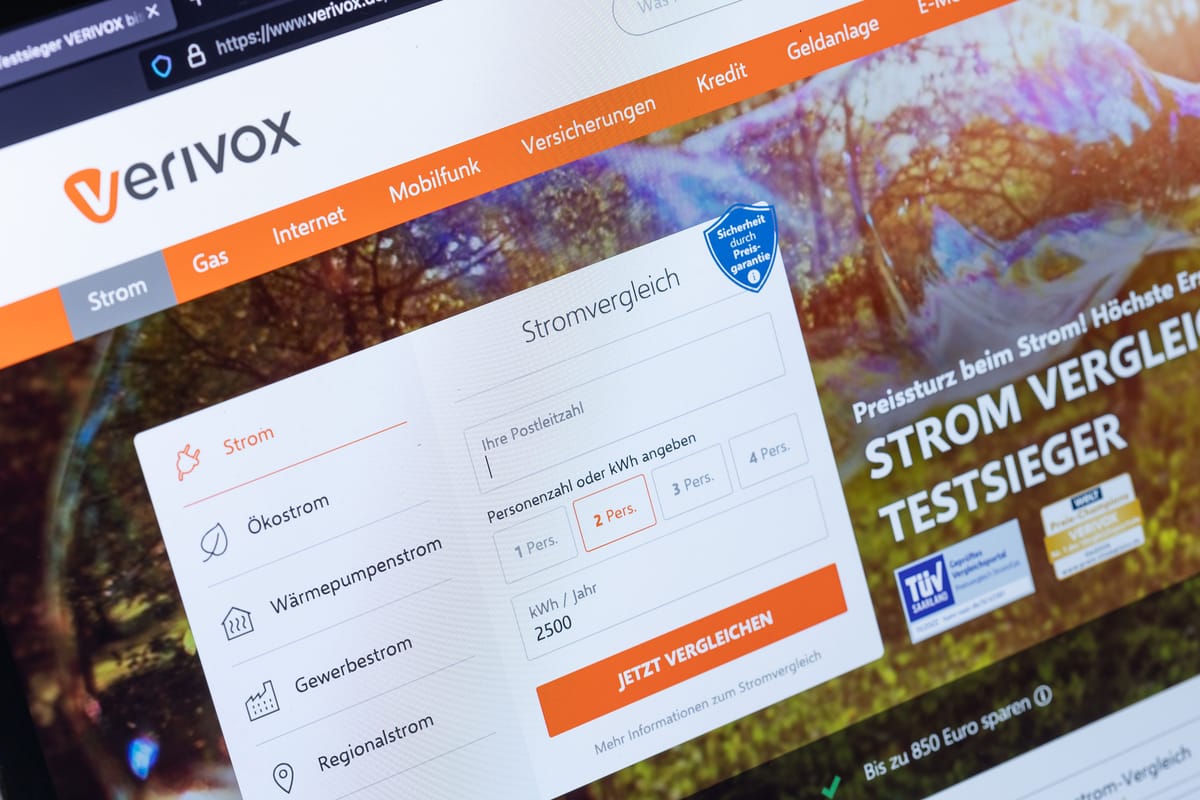
- Utilities & telecommunications: Comparison and switching of electricity, gas, and broadband contracts. Following the consolidation of Verivox and Pricewise (Netherlands), this is a key growth pillar. In Germany, Verivox addresses a market with a high willingness to switch ("churn market"), driven by price volatility.
- E-commerce price comparison: The group aggregates millions of physical products via Trovaprezzi.it (Italy). Here, users are shown the cheapest online shop for consumer goods.
Target customers (B2C) and motivation
- Consumers: The target group includes price-sensitive households and digitally savvy "smart shoppers" in Europe. Their motivation is primarily financial (savings-driven): the aim is to overcome the lack of transparency in complex markets (finance, energy) in order to reduce costs. Loyalty plays a secondary role here; the best offer wins.
- Product providers (B2B partners): Banks, insurers, and utility companies purchase access to new customers who are ready to make a purchase. For these partners, Mavriq solves the problem of high customer acquisition costs (CAC) and lack of digital reach.
1.2 Moltiply BPO&Tech Division
Here, the company sells operational excellence, scalability, and compliance security. It is effectively "infrastructure-as-a-service" for the financial industry.
Products and services
- Mortgages (loan processing): Moltiply handles the entire mortgage process for banks – from document capture and credit checks to para-notary services (preparation of notarial deeds). The bank outsources the "factory" of loan origination.
- Real estate services: Real estate appraisals and technical reports that are mandatory for the regulatory capital requirements of mortgages by banks.
- Loans (credit management): Specialized processing of "Cessione del Quinto" (salary-backed loans), an Italian niche product, as well as SME loans (often government-guaranteed).
- Claims (claims management): Through its subsidiary Lercari, Moltiply offers TPA (third-party administration) services for insurers. This includes claims assessment and technical processing without Moltiply bearing the insurance risk.
- Wealth & Asset Management: Provision of IT platforms for asset managers and fund supermarkets (FondiOnline).
Target customers (B2B) and motivation
- Financial institutions: Traditional banks (Tier 1 and Tier 2), online challenger banks, leasing companies, and insurers in Italy.
- Motivation: The main motivation is to make fixed costs variable. Banks are under enormous pressure to improve their cost-income ratios. By outsourcing to Moltiply, they convert fixed personnel costs into variable, volume-dependent costs. They also gain regulatory security, as Moltiply's processes are guaranteed to be compliant with Italian banking laws.
2. How they make money
The Moltiply Group's revenue model is diversified and uses different monetization mechanisms in the two divisions, which provides natural protection against market fluctuations.
2.1 Mavriq (broking) revenue model
The model in the broking sector is predominantly transaction-based and performance-related ("success fee"). There is hardly any recurring revenue in the form of subscriptions, but high volumes of individual transactions.
- Cost-per-action (CPA)/commission: This is the dominant revenue stream for mortgages and insurance.
- Mortgages: Moltiply receives a referral commission from the lending bank as soon as the loan is disbursed. This is typically a percentage of the loan amount (approx. 1.0% to 1.5%).
- Insurance: Here, a one-time acquisition commission (new business commission) is primarily payable when a new policy is taken out. In some international markets, trailing commissions may also apply, but in Italy, one-time transactions dominate.
- Cost-per-click (CPC): Mainly relevant in e-commerce comparisons (Trovaprezzi). Online retailers pay for the traffic directed to their site, regardless of whether a purchase is subsequently made. This is a pure lead generation model with a lower value-added depth than CPA.
- Cost per lead (CPL): For more complex products that are not purchased directly online (e.g., special insurance policies), payment is sometimes made for the qualified data record.
2.2 BPO&Tech revenue model
This model is volume-based with recurring characteristics, but is often billed on a transactional basis from a technical perspective.
- Service fees: Banks pay per unit processed – whether per mortgage application reviewed, per property valuation carried out, or per claim settled.
- Hybrid models: Framework agreements (3-5 years) often exist to regulate the cooperation. However, invoicing varies with the bank's business volume. If the bank does not grant any loans, BPO revenue declines, although minimum volumes or fixed components for the provision of IT infrastructure are often agreed upon.
- License fees: Pure IT platform solutions (e.g., in wealth management) also incur traditional software license and maintenance fees.
2.3 Revenue segmentation
The acquisition of Verivox shifted the balance significantly in 2025.
- Mavriq (broking): This division is now the clear revenue driver and contributed around 62% to consolidated revenue in the third quarter of 2025 with €103.2 million (total revenue in Q3: €165.4 million). Growth in this segment is explosive (+91.8% YoY), driven by M&A.
- BPO&Tech: With €62.2 million in revenue in Q3 2025 (approx. 38% share), this is the stable anchor. Growth here is more organic and moderate (+18.0% YoY).
3. Quality of revenue
The quality of revenue is high, but must be viewed in a differentiated manner, as the two divisions have different risk profiles.
3.1 Predictability
- BPO (high): The BPO division enjoys a very high degree of predictability due to deep process integration. A bank that has migrated its mortgage processing to Moltiply's platform ("vendor lock-in") will not change providers at short notice. Churn rates are minimal. However, revenues correlate with the lending volume of the bank's customers, which means there is a certain degree of macro dependence.
- Mavriq (medium to low): The broking business is highly cyclical and more volatile. Mortgage brokerage correlates almost 1:1 inversely with interest rates (as the slump in 2023/2024 showed). Insurance (especially motor insurance) is more stable as it is required by law (non-discretionary demand), but is subject to fierce price competition and the cyclical nature of insurance premiums ("hard/soft market cycles"). Energy comparisons are heavily dependent on price volatility in the energy market.
3.2 Diversification
Diversification has improved dramatically in recent years.
- Geographically: Before 2020, Moltiply was almost exclusively an Italian company ("Pure Play Italy"). The acquisitions of Verivox (Germany), Rastreator (Spain), LeLynx (France), and Pricewise (Netherlands) have significantly reduced the concentration risk in Italy.
- Product-wise: The mix of mortgages, insurance, telco, and energy smooths out economic cycles. When interest rates rise (bad for mortgages), inflation and prices often rise as well (good for insurance and energy comparisons, as customers become more willing to switch).
- Customer concentration: In BPO, there is a certain concentration on large Italian banking groups (e.g., Intesa Sanpaolo, UniCredit), which represents a cluster risk. In broking, the customer base (end consumers) is extremely fragmented, which eliminates the default risk.
4. Cost structure
Moltiply operates with two completely different cost profiles under one roof, which makes managing group margins complex.
4.1 Cost factors
- Mavriq (marketing-intensive): The dominant cost block is traffic acquisition costs (TAC). To drive users to platforms such as Segugio.it or Verivox.de, Moltiply invests heavily in TV advertising (for brand awareness) and performance marketing (Google Ads). These costs are largely variable; they can be reduced in the short term to secure cash, but this slows down growth.
- BPO (labor-intensive): Personnel costs dominate here. BPO requires qualified personnel (credit clerks, appraisers). Scalability is more linear here: more revenue often requires proportionally more personnel, although technology is increasingly enabling efficiency gains.
4.2 Margin development
The Group traditionally achieves high margins, but these fluctuate due to the mix shift and integration costs.
- Analysis: The broking division has extremely high operating leverage. Once marketing costs are covered, almost every additional euro of revenue goes into profit. The BPO division has more stable but structurally lower margins (EBIT <10%), as depreciation on technology platforms and goodwill weigh on operating profit.
- Scalability: Mavriq is highly scalable (software economics), while BPO scales more as a technology-enabled service (service economics).
5. Capital intensity
Moltiply is a classic asset-light business model that ties up little physical capital but makes high intangible investments.
5.1 Assets
- The balance sheet is dominated by intangible assets (goodwill, trademark rights, customer lists). Physical assets (factories, warehouses) are virtually non-existent. The acquisition of Verivox has massively inflated goodwill on the balance sheet 12, which increases the risk of impairments should the business perform worse than planned.
5.2 Investment requirements (capex)
- Low property, plant, and equipment capex: Investments are limited to IT hardware and office equipment.
- Software development: A significant portion of the tech team's personnel costs is capitalized (capitalized development costs). This improves the reported operating cash flow cosmetically, but must be viewed analytically as a real investment in maintaining competitiveness.
5.3 Cash conversion & working capital
- Working capital: The requirement is structurally negative to neutral. Insurers and banks pay commissions reliably, while Moltiply can often settle marketing expenses with payment terms.
- Cash conversion: Efficiency (EBITDA to free cash flow) is excellent, typically >70-80%. This enables the company to quickly repay debt from acquisitions (such as Verivox) ("deleveraging").
6. Growth drivers
6.1 Structural drivers (long term)
- Online penetration in Southern Europe: Italy and Spain still lag behind markets such as the UK and Germany in terms of online sales of financial products. The structural shift towards "ROPO" behavior (research online, purchase online) is the strongest and most enduring tailwind for the Mavriq division.
- Outsourcing imperative for banks: Regulatory and cost pressures on European banks are forcing them to outsource non-core processes. Moltiply benefits from the fact that banks have to convert fixed costs into variable costs. This trend is structural and unlikely to be reversed.
6.2 Cyclical drivers (short to medium term)
- Interest rate cuts (ECB): Falling key interest rates immediately stimulate the mortgage market (both new business and debt restructuring/surrogations). After the slump in 2023/24, a recovery is expected in 2025/26, which will directly benefit the revenues of MutuiOnline and the BPO mortgage division.
- Energy prices & volatility: High fluctuations in electricity and gas prices encourage consumers to switch providers. The acquisition of Verivox positions Moltiply ideally to benefit from the high churn rate in the German energy market.
6.3 M&A as a growth driver
Moltiply's strategy is that of a platform consolidator. By acquiring local market leaders or strong number two players in Europe (Rastreator, LeLynx, Verivox) and transferring technology and best practices, synergies are leveraged and inorganic growth is accelerated.
7. Competitive advantages
The company has strong, defensible competitive advantages (moats) that vary depending on the division but overall represent a high barrier to new market entrants.
7.1 Mavriq: Network effects and brand
- Brand & "share of mind": Thanks to years of TV advertising (featuring the iconic dog mascot), Segugio.it is almost synonymous with insurance comparison in Italy. This brand awareness leads to direct traffic (direct type-in), which does not incur Google costs and thus protects margins.
- Two-sided network effects: The more users Moltiply has, the more important the platform becomes as a sales channel for banks and insurers. No major Italian insurer can afford not to be listed on Segugio. Conversely, the more providers are listed, the more attractive the comparison is for the user (market liquidity).
- Economies of scale in marketing: As a major player, Moltiply can purchase TV advertising more efficiently and amortize it across multiple product categories (credit, insurance, energy) than smaller competitors.
7.2 BPO: Switching costs and integration
- High switching costs: In the BPO sector, Moltiply's IT systems are deeply integrated into its customers' core banking systems. Switching to a competitor would involve high operational risks, implementation costs, and business interruptions for a bank. This creates a quasi-monopolistic position in the niche ("sticky business").
- Regulatory expertise: The processes are precisely tailored to Italian bureaucracy (e.g., anti-money laundering checks, notarial preparatory work). This implicit knowledge and proven compliance are difficult for international IT competitors to replicate.
8. Industry structure and position
8.1 Market structure Broking (oligopolies)
The market for comparison portals in Europe tends toward oligopolies or duopolies ("winner takes most").
- Italy: Here, there is a duopoly between Moltiply (Segugio/MutuiOnline) and Facile.it. Facile.it is the aggressive, private equity-financed competitor (owned by Silver Lake). Moltiply has historically been stronger in mortgages, Facile in car insurance. Both share the market profitably, with Moltiply often considered the more rational player with higher margins.
- Germany: Through Verivox, Moltiply is entering a duopoly dominated by market leader Check24. Check24 is ubiquitous, but Verivox is holding its own as the established, profitable number two. Product providers value Verivox as an alternative to prevent Check24 from gaining a monopoly position.
- Spain: With Rastreator, Moltiply controls the market leader and competes primarily with Acierto.
8.2 Market structure BPO (niche specialization)
The market for banking BPO in Italy is fragmented but consolidated in niches.
- Moltiply is the clear market leader and category definer in mortgage processing.
- There is competition from large global IT service providers (Accenture, Capgemini) and specialized local players (CRIF), but Moltiply uniquely occupies the niche of "complex process handling" through its combination of technology and specialized manpower.
8.3 Positioning
Moltiply acts as a price setter in BPO (through specialization and a lack of alternatives) and as a power broker in the B2C sector. They are not a passive "platform," but an active market shaper that initiates product innovations at banks (e.g., introduction of pure online mortgage products in Italy).
9. Unit economics and key KPIs
9.1 Broking KPIs
- ARPU (Average Revenue Per User): This metric increases through successful cross-selling (e.g., a customer who comes in for car insurance is encouraged to switch electricity providers). The "multi-vertical" strategy is crucial for LTV (Lifetime Value).
- CAC (Customer Acquisition Cost): This is the critical efficiency metric. In Italy, CAC is stable thanks to the strong brand. In e-commerce comparison (Trovaprezzi), on the other hand, unit economics have come under pressure due to Google's changes (DMA). Costs per click are rising, which is compressing margins in this specific sub-segment.
- Conversion rate: The ability to convert traffic into sales. Moltiply's approach of using a call center for mortgage advice massively increases the conversion rate compared to purely online channels and justifies higher commissions for banks.
9.2 BPO KPIs
- Churn rate: Close to zero in BPO. Contracts run for years and are almost always renewed.
- EBITDA per employee: A measure of technological efficiency. This metric is slowly increasing due to automation, but remains limited due to the "people business" nature of the BPO sector.
9.3 Trend
Unit economics in the insurance sector are improving due to economies of scale and brand awareness (more organic traffic). In comparison to e-commerce, they are structurally deteriorating due to Google's market power (zero-click searches), which is forcing Moltiply to place less emphasis on this area.
10. Capital allocation and balance sheet
The management, led by founders Marco Pescarmona and Alessandro Fracassi (who together still hold approximately 32% of the shares), is considered an excellent capital allocator ("outsider CEO" profile).
10.1 Historical allocation
- M&A: This is the primary use of free cash flow. The company pursues a disciplined "buy-and-build" strategy. Acquisitions have historically been made at attractive multiples and successfully integrated.
- Dividends: Moltiply pays a steady but small dividend (yield often <1%). The focus is clearly on reinvesting in growth.
- Repurchases: Share repurchases are used opportunistically, often as currency for acquisitions or withdrawn when the share price appears fundamentally undervalued.
10.2 Balance sheet strength after Verivox
- Debt: Net debt has increased significantly due to the financing of the Verivox acquisition (March 2025) through bank loans. Management is targeting leverage (net debt/EBITDA) of 2.5x to 3.0x by the end of 2025. This is manageable for a strong cash-generating company, but is above the historical average (often net cash or <1.5x).
- Liquidity: The company generates strong free cash flow, which should enable rapid deleveraging in 2026/27, provided there are no operational setbacks. Off-balance sheet commitments are negligible, apart from earn-out components from acquisitions (estimated at approximately €10 million for Verivox).
11. Risks and sources of error
11.1 The "Google risk" and DMA (Digital Markets Act)
This is the most acute structural risk. The EU Digital Markets Act (DMA) was intended to regulate gatekeepers such as Google in order to promote competition. Paradoxically, Google's adjustments to its search results pages (SERPs) led to comparison portals (especially in e-commerce, such as Trovaprezzi) losing organic visibility or having to pay more for traffic, as Google favored its own shopping units or changed the display.
- Error scenario: Google continues to withdraw "free traffic" (SEO) from comparison sites and forces them completely into paid channels (SEA), which permanently reduces margins on a structural basis. 11
11.2 Interest rate risk
- A "higher for longer" interest rate scenario would stifle the recovery of the mortgage market. Moltiply's mortgage division (both broking and BPO) is highly sensitive to interest rate levels. High interest rates mean less new business and almost no debt restructuring.
11.3 Verivox integration risk
- Verivox operates in Germany against the extremely strong and aggressive market leader Check24. If Check24 starts a price war (e.g., massive increase in advertising spending), Moltiply could be forced to sacrifice margins at Verivox in order to maintain market share. Germany is a much more expensive marketing environment than Italy.
11.4 Regulation (insurance & BPO)
- In Italy, there have been investigations (IVASS/AGCM) into the transparency of comparison portals in the past. Stricter rules on the disclosure of commissions or bans on "best price clauses" could weigh on the business model. In BPO, there is a risk that banks will be forced by regulators to bring critical processes back in-house (insourcing).
12. Valuation and expected return profile
Moltiply is valued on the market as a "quality compounder," which is traditionally reflected in a premium multiple compared to pure banks or insurers.
12.1 Current valuation (as of January 2026)
- Price: approx. €35.00 - €41.00.
- Market capitalization: approx. €1.6 billion.
- P/E ratio 2025e: The share typically trades in the range of 18x - 22x adjusted earnings.
- EV/EBITDA: Historically, MOL traded at 12x-15x. Following the Verivox acquisition and the associated jump in earnings, the multiple appears more favorable, but must be offset against the increase in debt.
12.2 Scenario analysis
Assessment: The current price appears fair to attractive if one believes in the strategic logic of European expansion. The market is still pricing in a risk premium for the Verivox integration and macroeconomic uncertainty.
13. Catalysts and time horizon
13.1 Short-term catalysts (6-12 months)
- ECB interest rate cuts: Every downward interest rate move is a direct, strong buying impulse for Moltiply shares, as it increases the highly profitable mortgage volume in a leveraged effect.
- Q4 2025 / Q1 2026 quarterly figures: Quantitative proof that Verivox has been profitably integrated and that deleveraging (debt reduction) is progressing faster than planned would boost investor confidence.
- Rebranding effects: The complete establishment of the "Mavriq" brand for investors could help reduce the "conglomerate discount" by making the value of the individual parts (sum-of-the-parts) more visible.
13.2 Medium-term catalysts (1-3 years)
- Cross-selling synergies: Introduction of BPO services in new markets (Germany, Spain). If Moltiply can transfer its BPO expertise to German banks, this would multiply the total addressable market (TAM).
- Market consolidation: Further opportunistic acquisitions of smaller players in fragmented markets (e.g., Eastern Europe) could follow.
References
- Moltiply Group, accessed January 13, 2026, https://www.moltiplygroup.com/
- Mavriq companies, accessed January 13, 2026, https://www.mavriq.com/mavriq-companies
- Moltiply Group Q3 2025 presentation slides: Revenue surges 55%, Mavriq division leads growth - Investing.com, accessed January 13, 2026, https://www.investing.com/news/company-news/moltiply-group-q3-2025-presentation-slides-revenue-surges-55-mavriq-division-leads-growth-93CH-4362968
- Price Comparison Websites: Britain's Next Export? - Fairgrove Partners, accessed January 13, 2026, https://fairgrovepartners.com/insight/price-comparison-website-britain-export/
- Moltiply Group SpA Stock Price Today | BIT: MOL Live - Investing.com, accessed January 13, 2026, https://www.investing.com/equities/gruppo-mutuionline-spa
- Mortgages | Moltiply BPO&Tech, accessed January 13, 2026, https://www.moltiplybpo.com/services/mortgages
- Claims | Moltiply BPO&Tech, accessed January 13, 2026, https://www.moltiplybpo.com/services/claims
- Third Quarter 2025 Results - Moltiply Group, accessed January 13, 2026, https://www.moltiplygroup.com/cms-sitopubblicomol/Q3_2025_results_presentation_4f75f67d91.pdf
- MOLTIPLY GROUP S.P.A. CONSOLIDATED HALF YEAR FINANCIAL REPORT SIX MONTHS ENDED JUNE 30, 2025 (FIRST HALF 2025) Prepared in accordance with, accessed January 13, 2026, https://www.moltiplygroup.com/cms-sitopubblicomol/Half_year_Report_2025_SDIR_b1a9580ebc.pdf
- White & Case advises lenders on €450 million financing for Moltiply's acquisition of Verivox, accessed January 13, 2026, https://www.whitecase.com/news/press-release/white-case-advises-lenders-eu450-million-financing-moltiplys-acquisition-verivox
- Full Year 2024 Results - Moltiply Group, accessed January 13, 2026, https://www.moltiplygroup.com/cms-sitopubblicomol/FY_2024_results_presentation_4c78ecd6ae.pdf
- MOLTIPLY GROUP S.P.A. ANNUAL FINANCIAL REPORT AS OF AND FOR THE YEAR ENDED DECEMBER 31, 2024 Prepared according to IAS/IFRS (Th - EMARKET STORAGE, accessed January 13, 2026, https://www.emarketstorage.it/sites/default/files/comunicati/2025-03/20250331_163734.pdf
- Friends or foes: The rise of European aggregators and their impact on traditional insurers - McKinsey, accessed January 13, 2026, https://www.mckinsey.com/~/media/McKinsey/Industries/Financial%20Services/Our%20Insights/Friends%20or%20foes%20The%20rise%20of%20European%20aggregators%20and%20their%20impact%20on%20traditional%20insurers/Friends-or-foes-The-rise-of-European-aggregators.ashx
- Segugio.it Competitors and Alternatives - Owler, accessed January 13, 2026, https://www.owler.com/company/segugio/competitors
- 1 Case summary August 5, 2015 Acquisition of the online comparison platform Verivox by ProSiebenSat.1 approved Sector - Bundeskartellamt, accessed January 13, 2026, https://www.bundeskartellamt.de/SharedDocs/Entscheidung/EN/Fallberichte/Fusionskontrolle/2015/B8-76-15.pdf?__blob=publicationFile&v=5
- Moltiply (MOL) Stock Dividend History & Date 2025 - Investing.com, accessed January 13, 2026, https://www.investing.com/equities/gruppo-mutuionline-spa-dividends
- ProSiebenSat.1 sells Verivox to Moltiply and simplifies its Group structure, accessed January 13, 2026, https://www.commerceandventures.com/news/prosiebensat1-sells-verivox-to-moltiply-and-simplifies-its-group-structure-515838
- I856 - ICA: investigation launched into price comparators and insurance companies for suspected agreement on motor vehicle liability policies - AGCM, accessed January 13, 2026, https://en.agcm.it/en/media/press-releases/2021/5/I856